Miscellaneous
Arts, science, technology and history
A motley collection
This modest yet diverse collection comprises antique manufactured objects that do not form part of the museum’s science collections directly or exclusively. Comprising a variety of items—including busts, preparatory models, scientific instruments, educational materials and relief maps—it relates as much to the history of science as it does to museology, the fine arts and what are known as folk arts and traditions.
The diversity of the items, which makes them difficult to classify within the museum’s collections, is due to their origins. They were not always acquired specifically to enrich the heritage collections (this is the case with collections intended for educational purposes or with casts and preparatory studies by taxidermists that have now become part of the heritage), and are generally isolated items that do not necessarily form part of a coherent group at the time of their entry (notably busts of donors and works of art transferred alongside scientific collections); and without the context of their acquisition, their place in a modern natural history museum might sometimes be called into question.
arts, sciences and technology
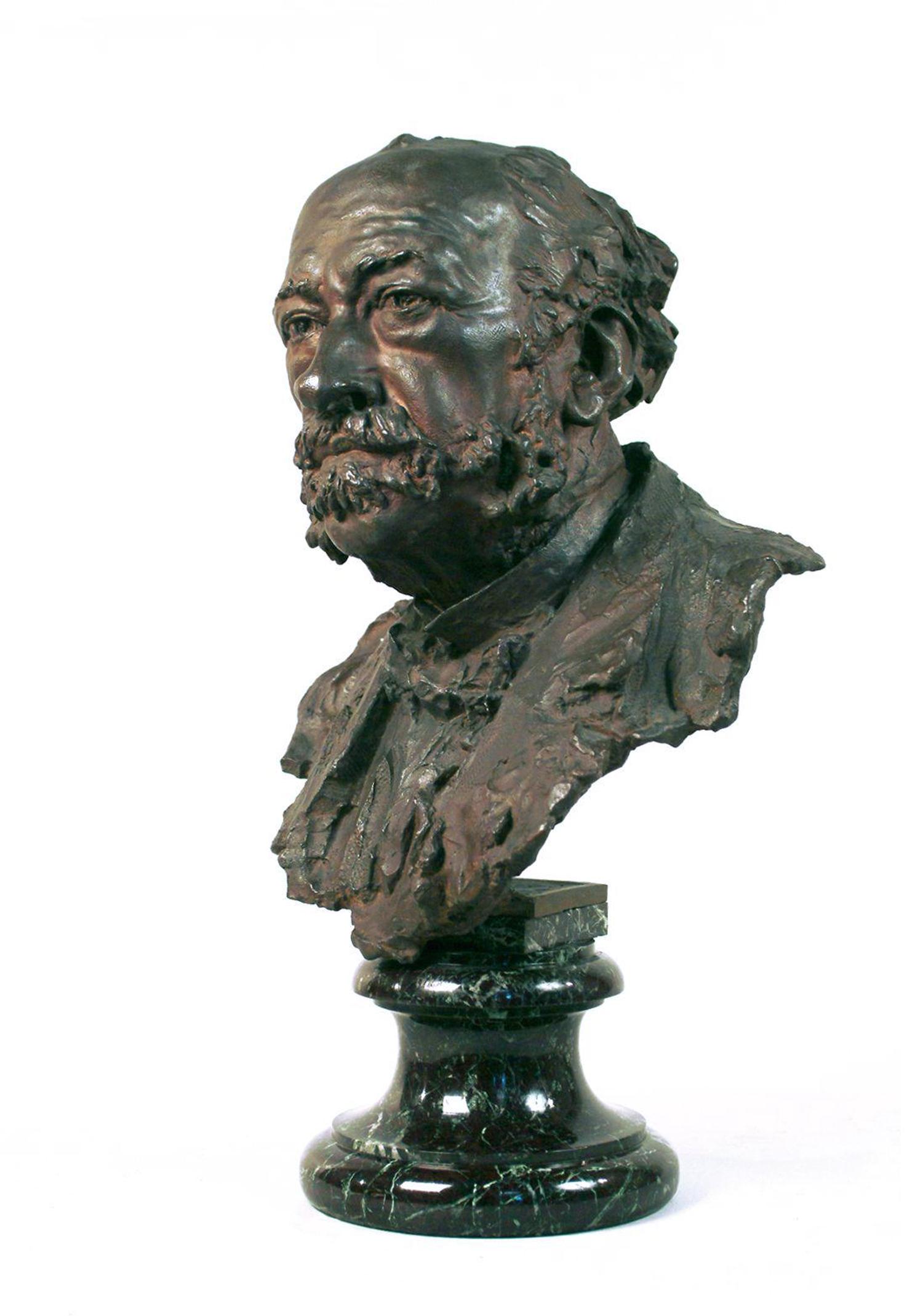
Émile Cartailhac par Victor Ségoffin fondu par Andro 1922 - coll. muséum, MHNT.MISC.2001.0.2
Before the advent of photography and the widespread adoption of this technique, scientific research and artistic practice were closely intertwined; the use of graphic arts and sculpture was essential for naturalists wishing to publish and share their discoveries. When researchers did not produce these representations themselves, they called upon naturalist draughtsmen or moulders, who sometimes took part in expeditions and exploratory missions.
This was the case with Pierre Marie Alexandre Dumoutier, a phrenologist and moulder, who took part in the expedition of Jules Dumont d’Urville to the South Seas (1837–1840). The National Museum’s anthropology laboratory reproduced and widely distributed these busts; today they can be found in several art schools and museums, including the one in Toulouse.
Philippe Picot de Lapeyrouse commissioned Pierre-Joseph Rédouté and the engineer and botanist Laferrerie to produce the drawings for plates1 of Figures de la flore des Pyrénées, 1795–1801 (Museum collection, reference A 58, Rosalis). Some of Laferrerie’s plates were exhibited at the Toulouse Exhibitions of Fine Arts and Industrial Products in 1827 and 18292 among various osteological displays, stuffed animals, entomological boxes and anatomical casts3.
In 1844, the Toulouse painters Léon Soulié4 and Jules Boilly5 worked on the taxidermy of the giraffe that had died in Toulouse with Nicolas Joly, Achille Lavocat and the taxidermist Fleury Traverse. An illustrated study on the preparation of this giraffe was published6. This specimen, which is still preserved at the museum, was fully restored in 1910 by Philippe Lacomme. To do this, he sculpted a preparatory model unfortunately, this has since been lost but can be seen in photographs by Augustin Pujol documenting this work.
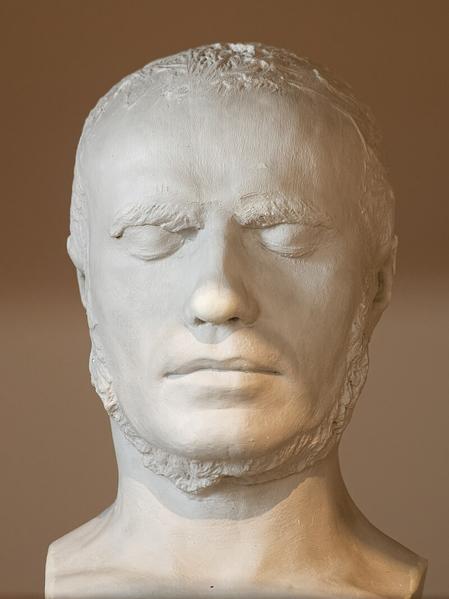
P. M. A. Dumoutier
(1797-1871)
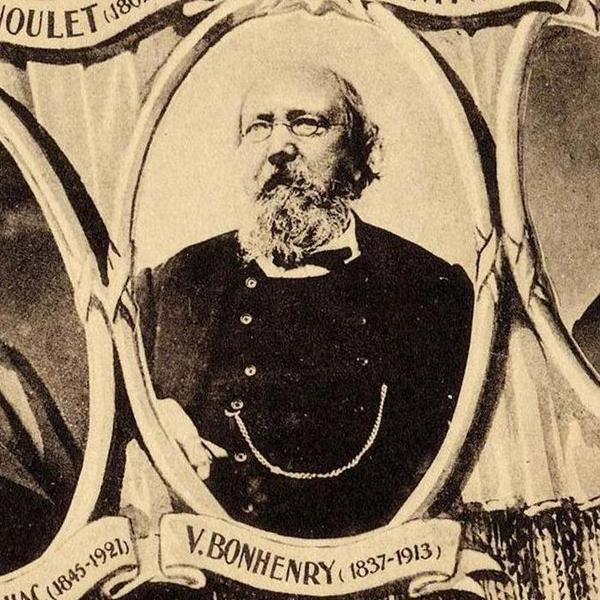
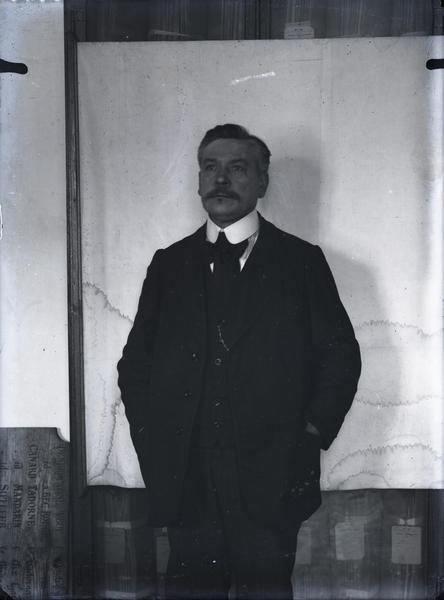
At that time, the artists were held in high esteem by the scientific community, and the preparers, moulders and taxidermists were regarded and referred to as such, at least amongst the workshop heads whose identities have come down to us. In Toulouse, Bonhenry and later Lacomme, his pupil, worked alone, although the latter sometimes had ‘laboratory assistants’. They were renowned local figures, and Bonhenry even featured on a postcard by Labouche in the ‘Types toulousains’ series: ‘Mr B. Preparator at the Natural History Museum’.
Artists and architects have always drawn inspiration from the natural world. With colonial expansion, Westerners discovered cultures and animal and plant species previously unknown to them, from which they drew extensively. This was the case with Théodore Rivière, of whom the museum holds a statuette of an Afar man (from the Horn of Africa) as well as medallions of people associated with the museum (Eugène Trutat, Gustave Marty and the curators Philippe Lacomme, Victor and Pauline Bonhenry).
Taxidermists provide training in taxidermy; students and amateurs practise drawing in the museum’s galleries; and collections are loaned to the School of Fine Arts for life drawing7. This practice continued for over a century, and a specific collection was assembled for this purpose8. An article in La Dépêche of 26 April 18789 modestly reports: ‘We cannot leave this room without saying a word about the extremely remarkable quality of the taxidermy: we can, in fact, affirm that there is no museum in France, not even in Paris, where stuffed animals are treated with the skill that our taxidermist [Victor Bonhenry, a former student of the zoologist and taxidermist at the MNHN, Théodore Poortman] has applied to every specimen emerging from his laboratory. The large mammals, for example, bear little resemblance to the hay-stuffed skins that usually adorn museums. In Toulouse, each specimen is a true work of sculpture; the muscles can be felt beneath the skin of the tiger and the lion, and the animal’s movement is lifelike; thus painters and sculptors come to our galleries in search of models they would be unable to find elsewhere.‘
In addition, artists have contributed to the collections across all disciplines: the painter Fernand Mazzoli10 donated a New Zealand club in 1873, the poster artist Arthur Foäche donated a stuffed polecat in 1902, and in 1965 the museum acquired the collection of stuffed birds by Roger Reboussin, an animal artist, ornithologist and professor of drawing at the National Museum. Whether through the media and techniques employed or via the artists or donors themselves, this collection highlights artistic practices, whether for scientific purposes or for social representation.
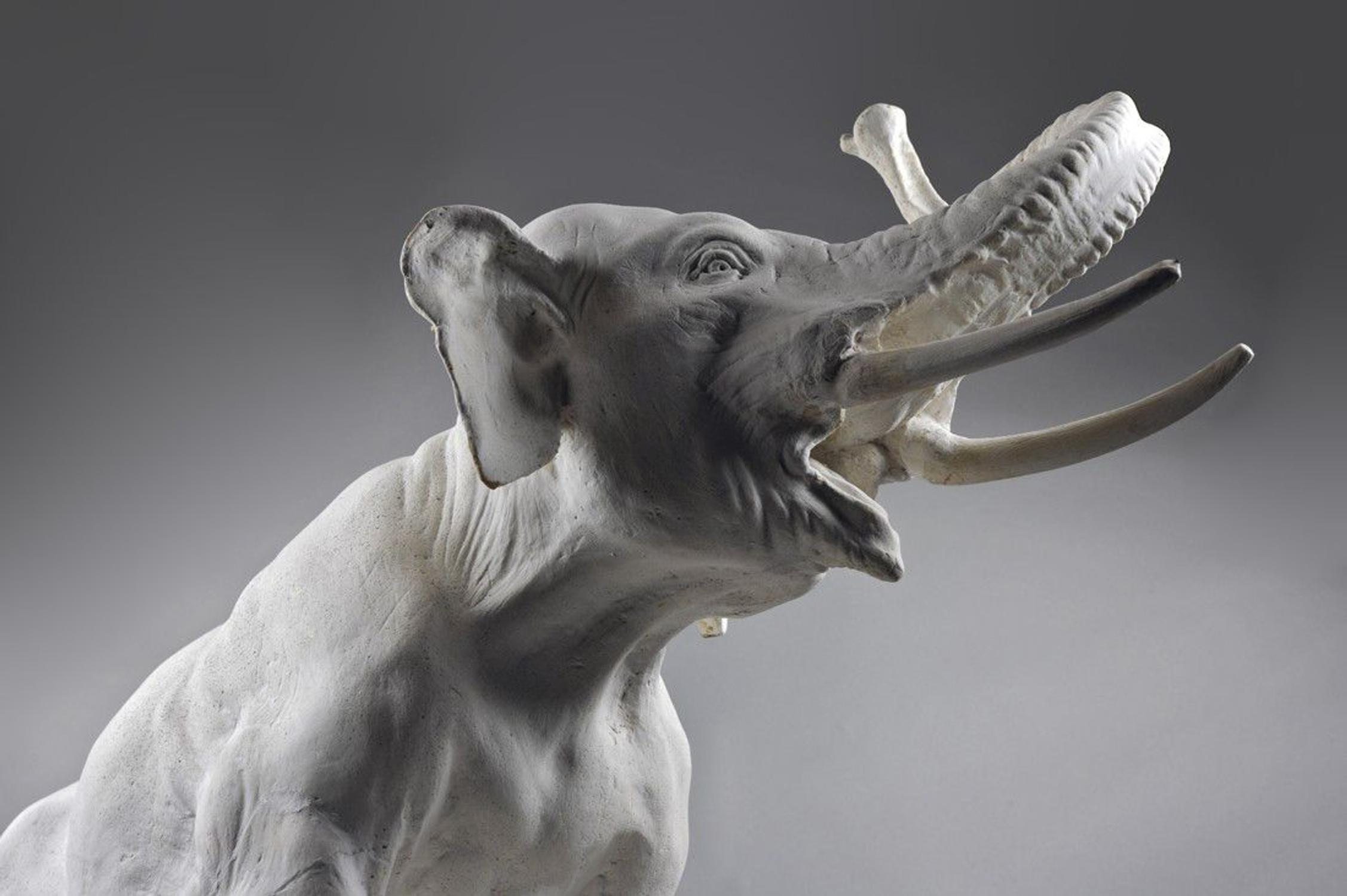
Éléphant d'Asie en fureur, maquette préparatoire pour la naturalisation de l'éléphant Punch, P. Lacomme, 1911 - coll. muséum, MHNT.MISC.2018.0.1

Journal du laboratoire de Philippe Lacomme mentionnant un prêt au professeur Henry Parayre (voir ses œuvres dans le catalogue des Augustins)

« Dessin pour un montage artistique [...] modèle en plâtre », Dépenses du laboratoire 1868-1888, Bonhenry - cote muséum, A 06 09 39
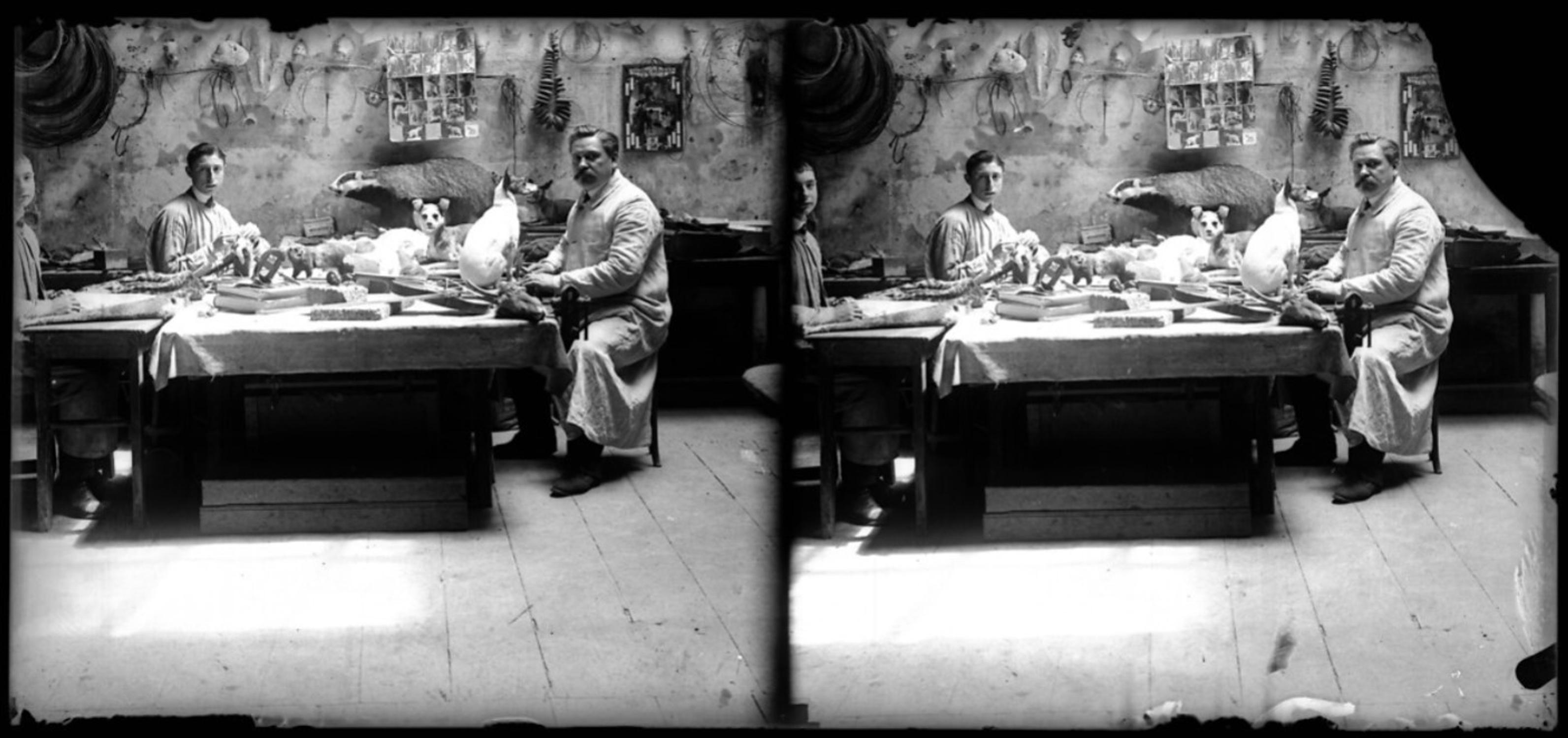
Philippe Lacomme et deux élèves ou aides laboratoire qui pourraient être Lucien Blanc et Marcel Piquemal - coll. muséum, MHNT.PHa.613.01.01
anatomical casts, models and dioramas
Part of this collection stems from the practices of the laboratory taxidermists. Among the casts is a series of anatomical models made from the animals’ skins, intended to preserve a record of the volumes and musculature for the preparation of the specimens. Victor Bonhenry and Philippe Lacomme also made preparatory models in wax or clay to determine the position of the specimens to be preserved. Although often badly damaged, some are still in the collections.
A small series of animal sculptures, the provenance of which is not always known (visible in old photographs of the laboratory), is also still present in the museum.
Another series of anatomical casts: a substantial collection of plaster casts of fossil and modern teeth, bones and brains, which was used for the comparative study of species (Édouard Lartet collection). Included in the miscellaneous collection to maintain the integrity of the set, it relates to the disciplines of palaeontology, prehistory and zoology and also includes a few original specimens.
In 1933, Lacomme reconstructed the Tuc d'Audoubert cave for the new prehistory gallery (which opened on 13 April 1935). He made two trips to Ariège to study the cave and prepare for the creation of the facsimile, which would feature a life-size replica of the bison he had modelled in 1923, and produced drawings and a preparatory model. In April 1933, he sent his work to the National Museum for the Retrospective Exhibition of Animal Art and travelled to Paris to supervise a reconstruction of the cave.
The diorama display at the Toulouse museum no longer exists today, but the bison reconstruction is still part of the prehistory collection, and a bronze cast of the preparatory model was commissioned from Maison Camus in 1929.
Lacomme also created two mannequins illustrating falconry and goose force-feeding for the exhibition spaces, examples of the museography still in use in the 1930s11. The goose force-feeder was displayed at Orsay station as part of a tourism advertising campaign organised by the Compagnie des chemins de fer du Midi.
Moulding, through the production of multiple copies, was conducive to study and, above all, to dissemination. In the natural sciences, when the original type specimen used to describe the species has been lost, its copy takes on a new scientific and heritage significance and becomes a plastotype. Some casts therefore possess great scientific value. Philippe Lacomme’s preparatory wax models, foreshadowing his future taxidermy pieces, cast in plaster or bronze and thus preserved and exhibited, transition from the status of anatomical studies to that of works of art.
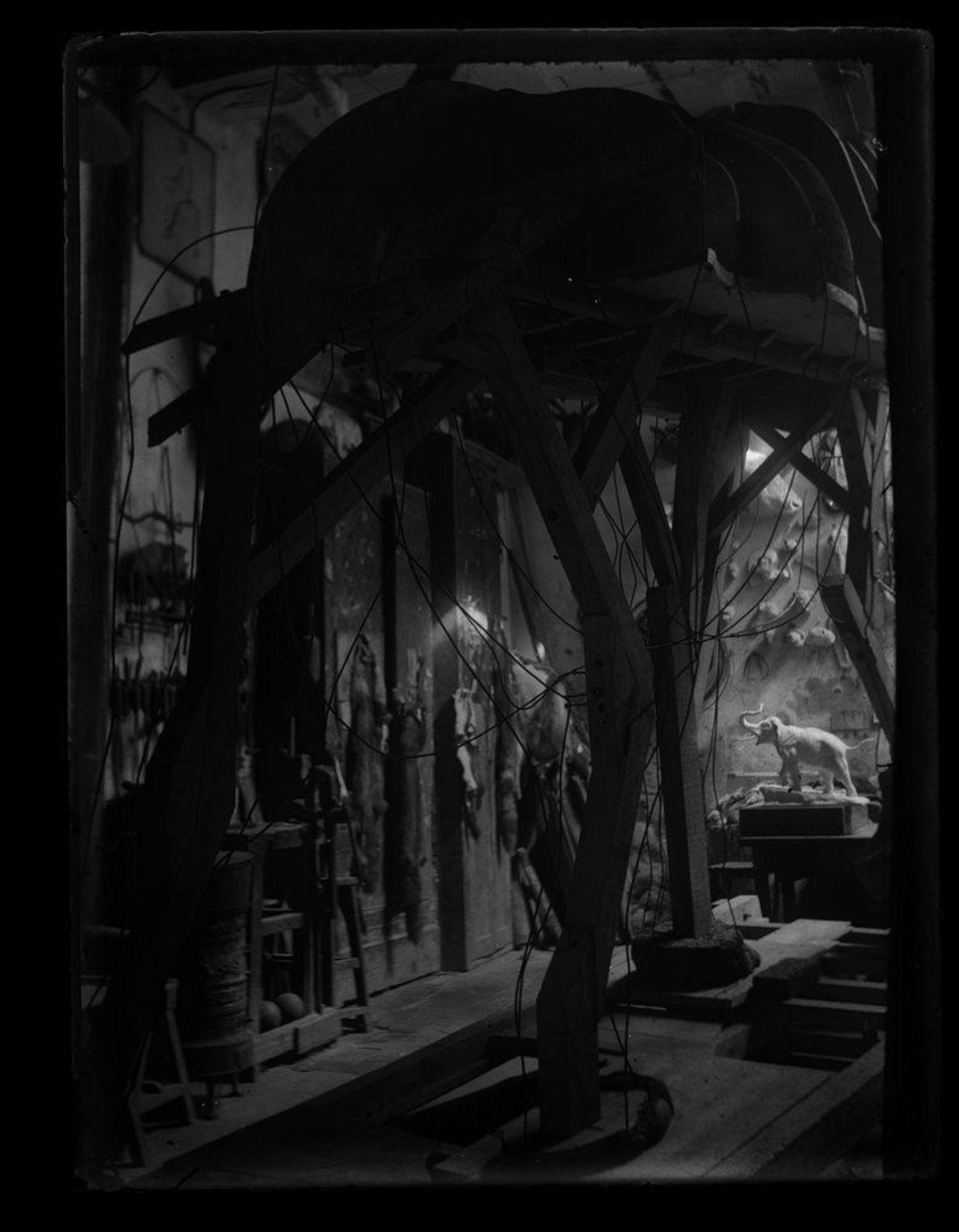
Structure et maquette de l'éléphant par le préparateur P. Lacomme, photo. : A. Pujol - coll. muséum, MHNT.PHa.912.M2.02
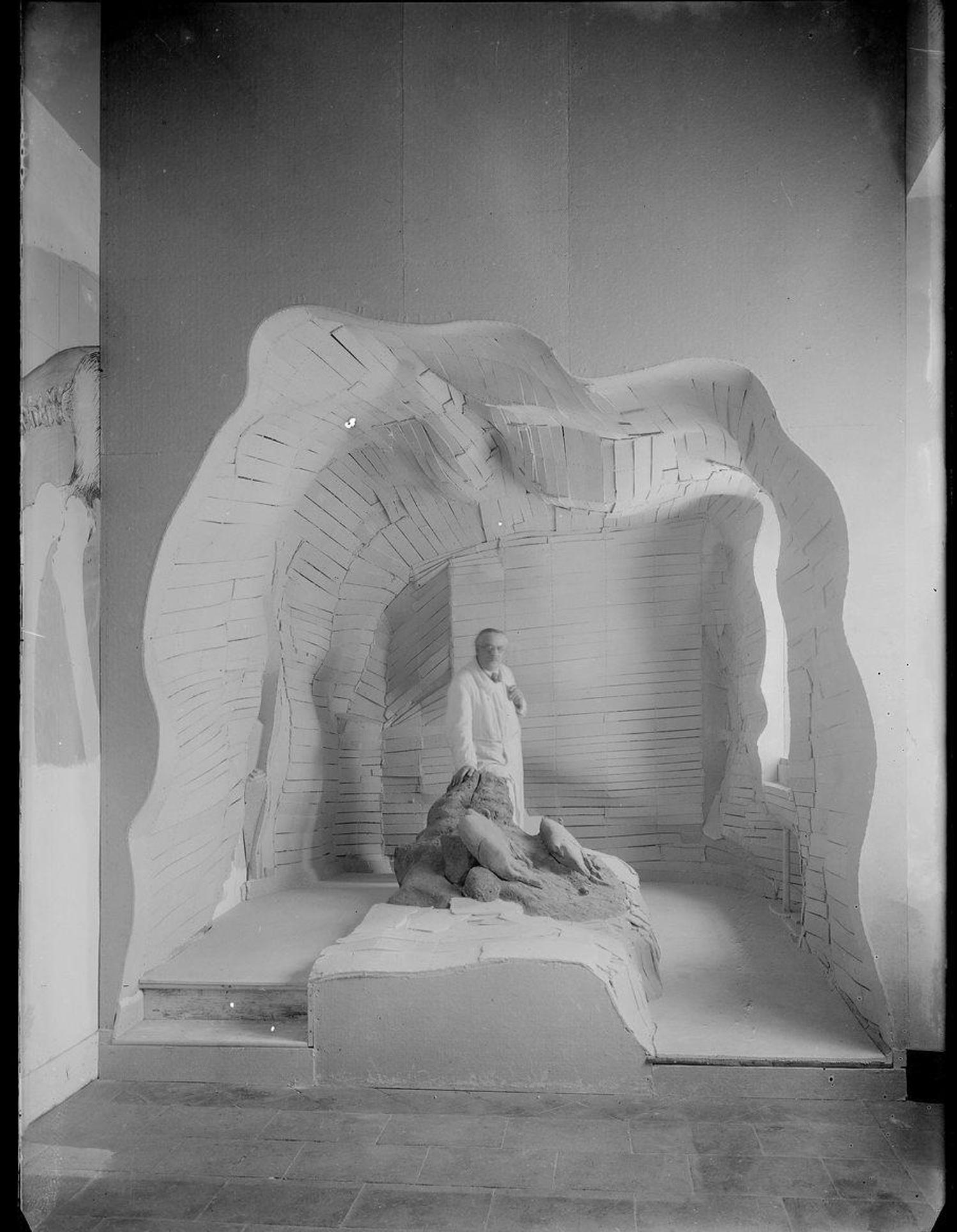
Diorama de la caverne du Tuc d'Audoubert, Philippe Lacomme, 1923, photo. : A. Pujol - coll. muséum, MHNT.PHa.138.B06.10
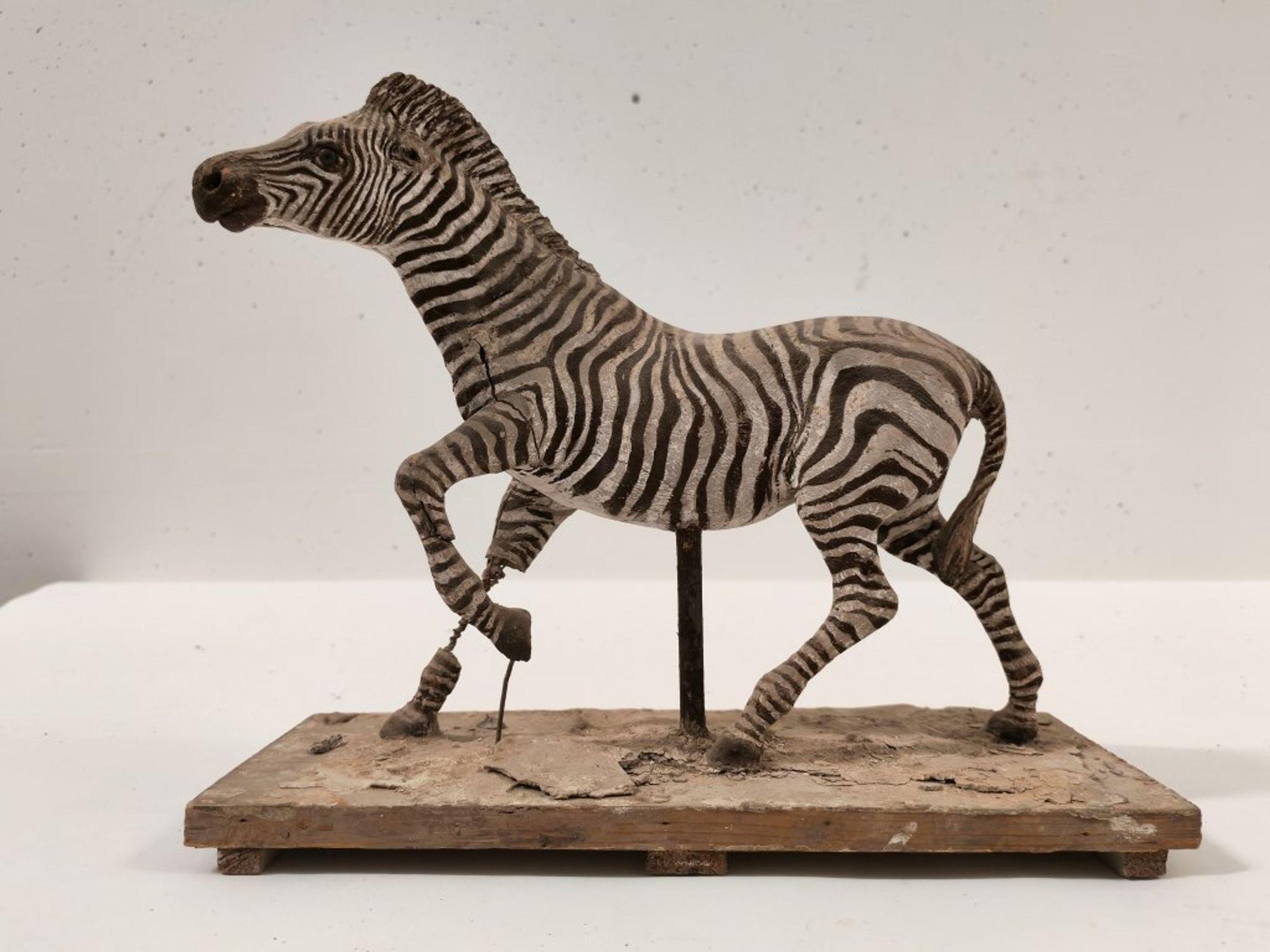
Maquette de zèbre par Lacomme, photo. : J. Vila - coll. muséum, MHNT.MISC.2025.0.2
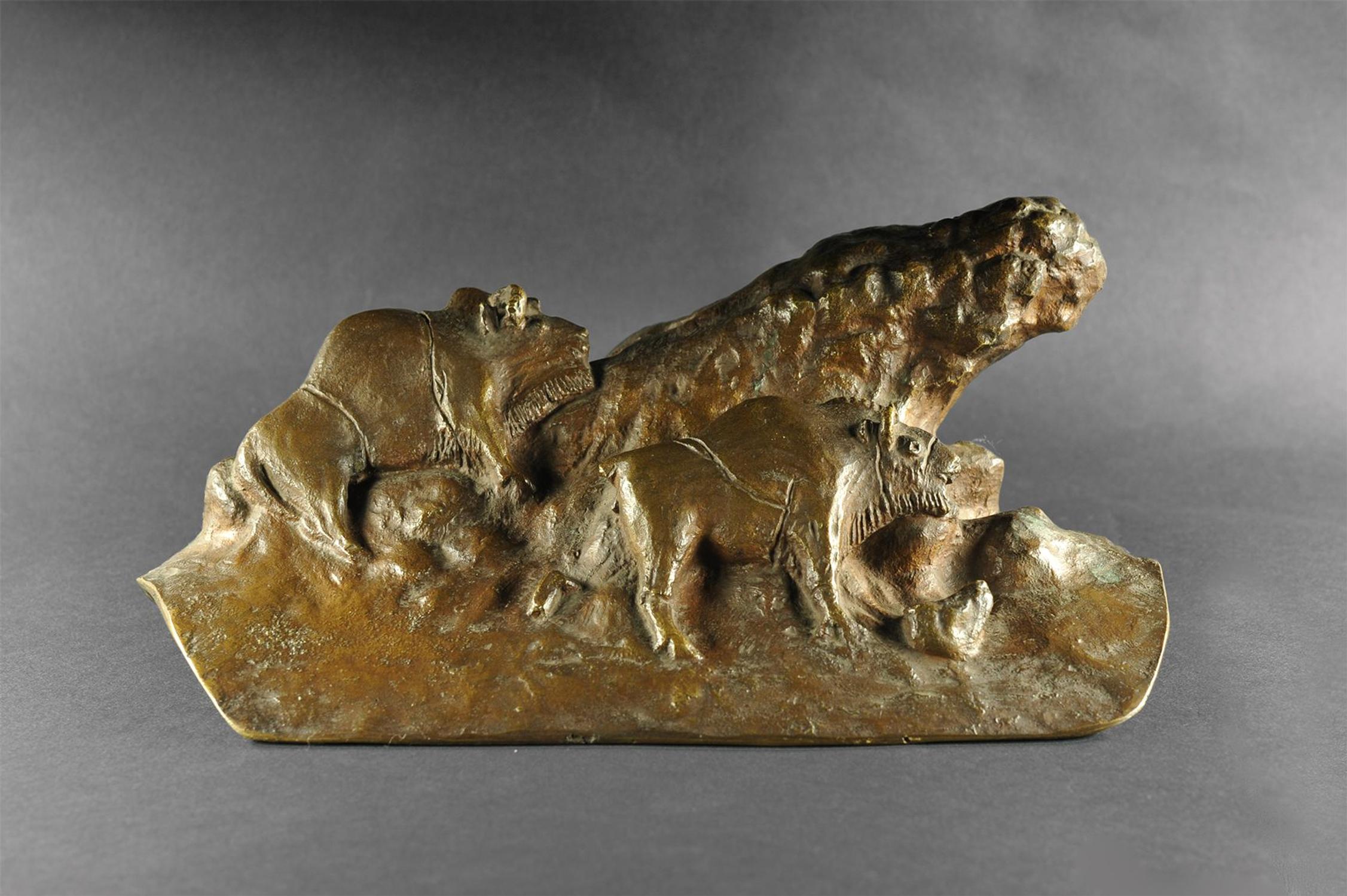
Tirage de la maquette des bisons du Tuc par Lacomme, bronze, photo. : J. Vila - coll. muséum, MHNT.MISC.2019.0.1
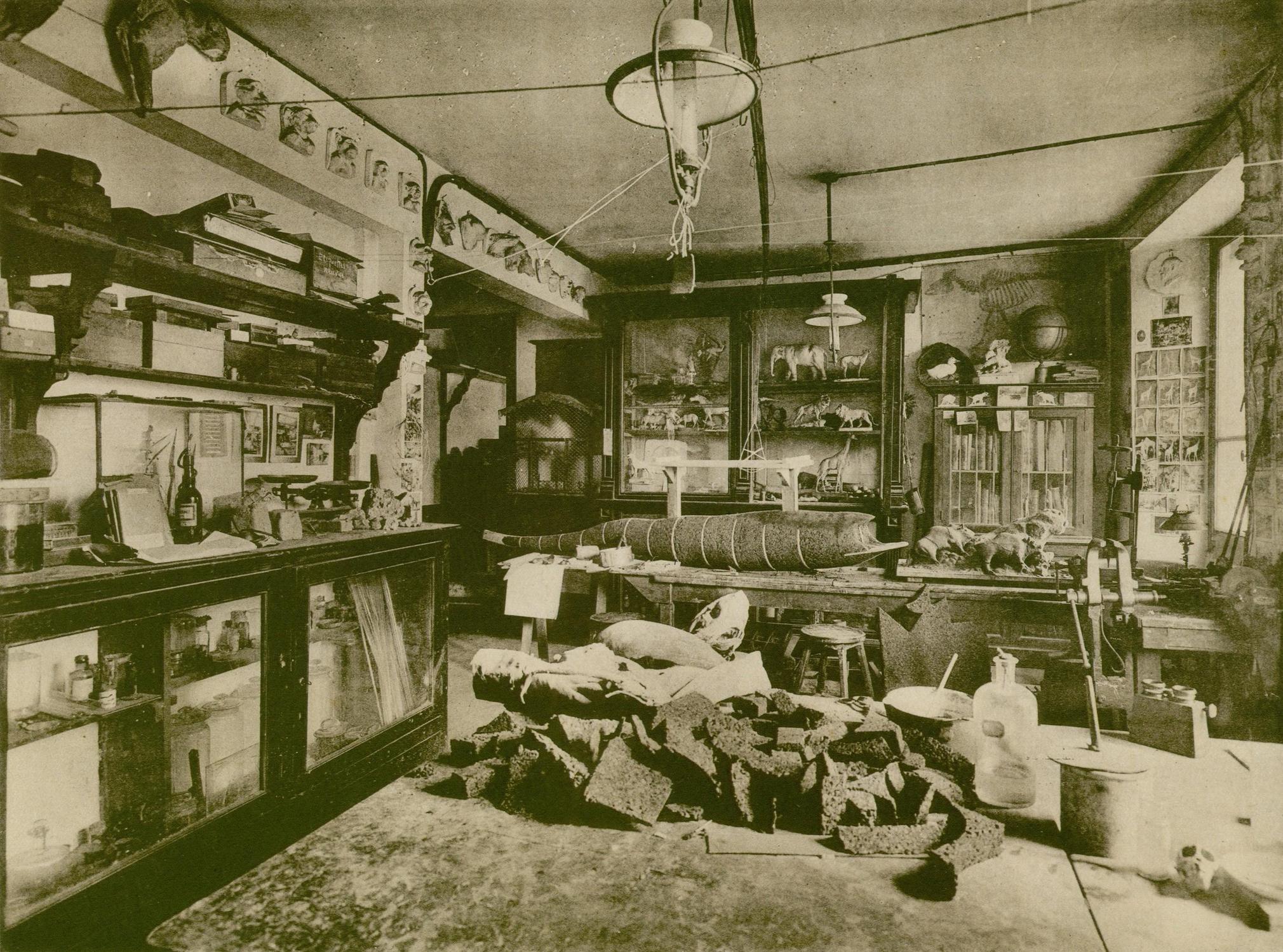
Laboratoire : sculptures, médaillon de Rivière, moulages, photo. : Pujol - Musée d'histoire naturelle, Lécaillon, Mengaud, 1923, cote A 139
Bustes et médaillons
The bust collection comprises so-called ‘anthropological’ busts and masks, busts of figures associated with the history of the museum and its collections, as well as three busts of gorillas and orangutans.
Among the ‘anthropological’ busts are the life casts by the phrenologist Pierre-Marie Alexandre Dumoutier (Expédition Jules Dumont d’Urville, 1837–184012). The aim was to bring back accurate reproductions of the populations encountered for comparative study. Copies of these casts were widely sent to museums and schools with scientific and artistic focuses in France and internationally. They were used for anatomical study and had an aesthetic and ‘exotic’ dimension that attracted audiences curious to discover distant populations, new to Westerners. Phrenology aimed to classify individuals and populations by determining their characteristics based on the shape of their skulls. An obsolete pseudoscience, ethically questionable and already criticised in its day, one might wonder under which discipline these faces should be classified. Initially catalogued under anthropology to reflect their original categorisation upon their arrival in the 19th century, and lacking any scientific basis, they now form part of the miscellaneous collection.
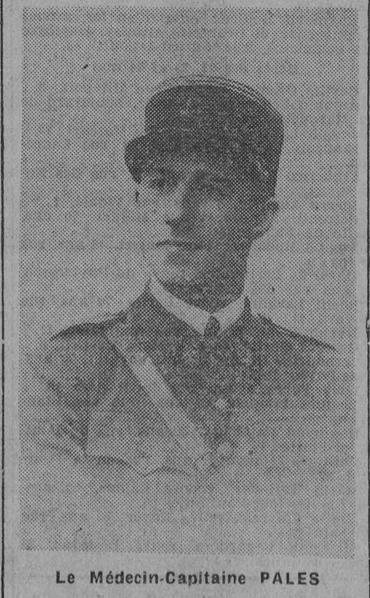
This collection also includes two series of casts of busts made by the military doctor Léon Pales in Brazzaville (Republic of the Congo) and Chad in the 1930s, and copied by the laboratory technician Philippe Lacomme, who also produced casts for the École du Pharo (Marseille), the University of Toulouse, the A.E.F. agency in Paris and the Trocadéro Museum13. Pales produced his first series in collaboration with the sculptor Émile-André Leroy, who was in receipt of an artistic grant for his stay.
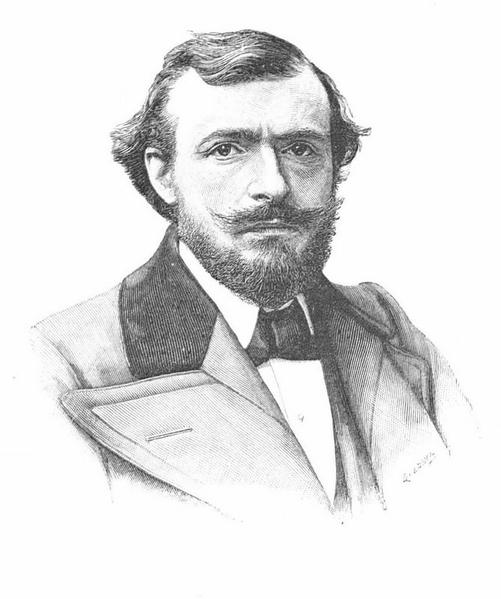
Artistic works, such as portraits in the form of statues or bas-reliefs created by artists recognised, at least locally, as a means of immortalising scholars and presenting them to the public, some older donations include busts signed by Théodore Rivière, Charles Rouède or Victor Ségoffin (the latter was close to Cartailhac, who introduced him to prehistory and to whom he gave advice on lighting for a portrait, perhaps the one painted by Madeleine Cartailac and held at the Agustins, 49 6 18). Curators, preparators and scientists are depicted in this small series and, although falling within the realm of fine art, these works are linked to the museum through the subjects portrayed and their historical and emotional significance.
The three primate busts in the collection are casts of specimens moulded at the National Museum, including Max and Maurice, residents of the Jardin d’Acclimatation.
Educational collections
Sixty-four moulds of mushrooms by Jean-Eugène Trablit, divided into two series – ‘edible’ and ‘inedible’ – were acquired in 1912 for teaching and educational purposes, much like the boîtes scolaires in the ethnobotanical collection, although the latter also had a commercial and colonial propaganda dimension.
This was the era of the ‘popular and practical education’ museum; the archives of the administrative committees reveal that the curators were discussing the museum’s purpose, which they wanted to be educational. Among other things, they decided to add the local names of the species to the labels and to describe the uses of the plants for educational purposes, particularly for pupils at agricultural colleges.
In the educational section, there are also anatomical models from Maison Deyrolle and the half-flayed figures by Jules Talrich, self-portraits whose life-size models were exhibited at the 1867 World’s Fair.
Paléoart
The museum houses a number of examples of palaeoart, a category defined as comprising prehistoric or palaeontological reconstructions based on scientific knowledge that was ‘accurate’ at the time of their creation.
These include a prehistoric man and woman by Yvonne Parvillée, depictions of megaceros by Marthe Alers-Abran (a pupil of Rodin) and three dinosaurs by Vernon Edwards.
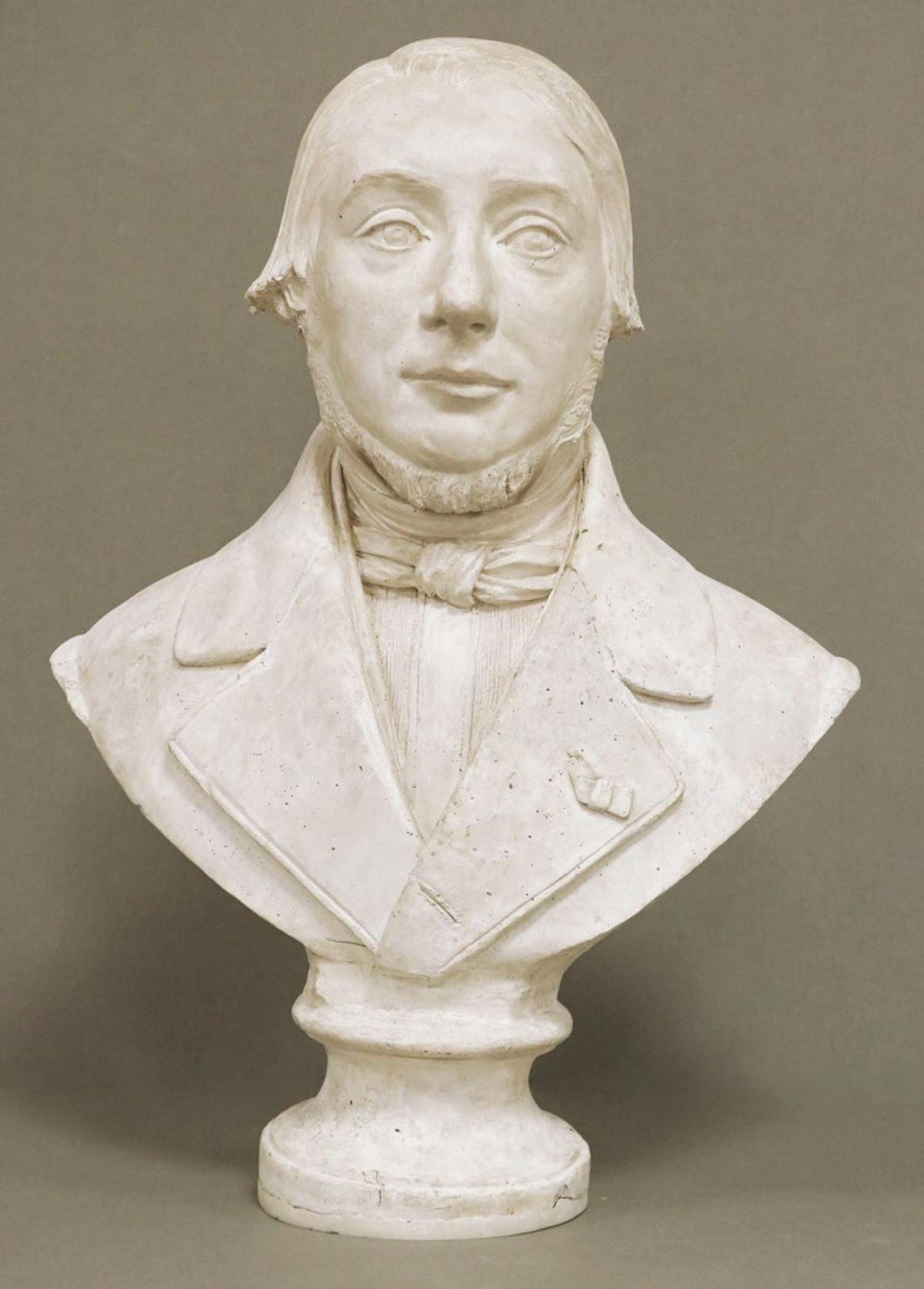
Buste d'Édouard Filhol par Charles Rouède circa 1835, legs Marie Bertrand 1953, photo. : J. Catalo - coll. muséum, MHNT.MISC.2022.0.1.4
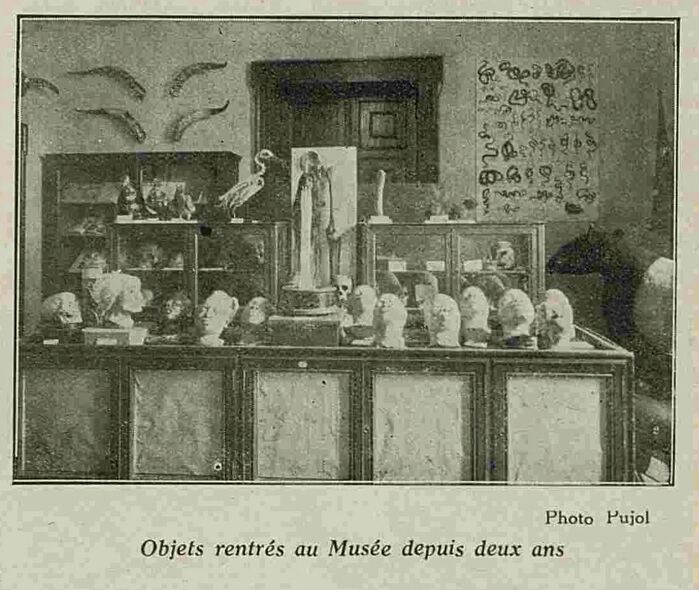
Bulletin municipal, À Toulouse : le magazine d'informations de la ville de Toulouse, mai 1937 - Rosalis
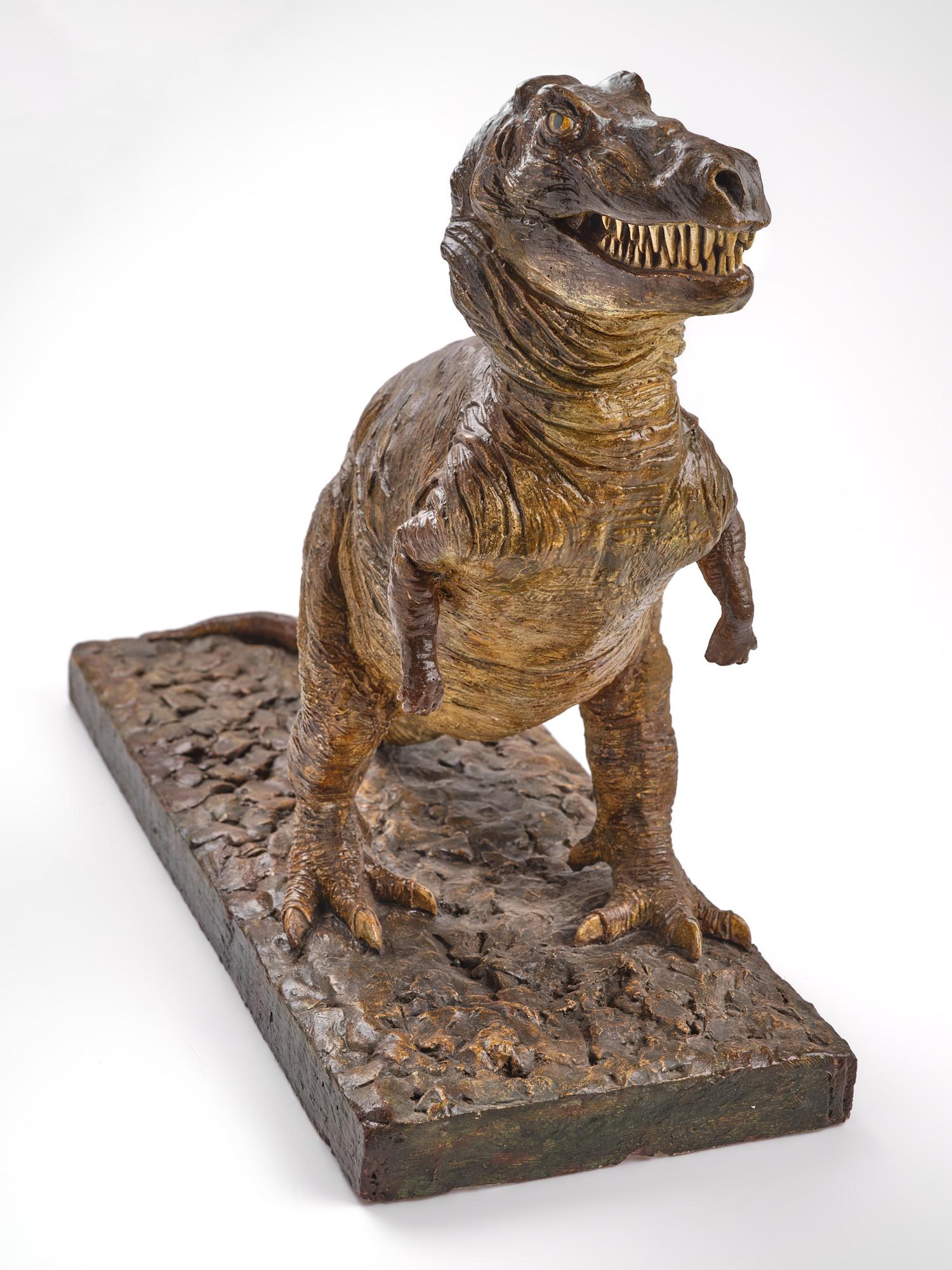
Modèle réduit de Tyrannosaure par V. Edwards, photo. : Daniel Martin - coll. muséum, MHNT.MISC.2016.0.9
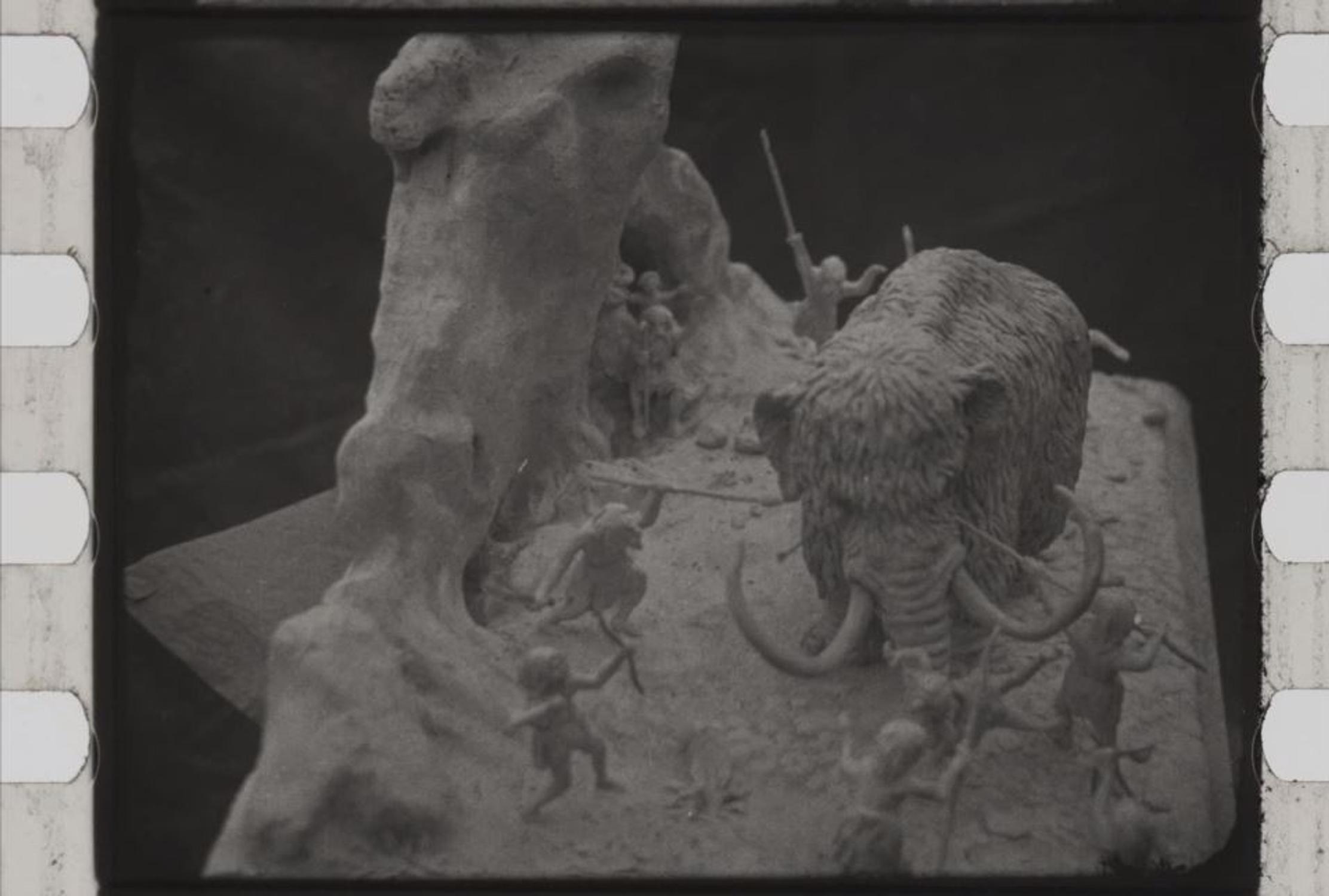
Maquette Les animaux disparus. Le mammouth, P. Lacomme filmée par Joseph Mandement en 1918 - coll. muséum, MHNT.MISC.2014.0.6
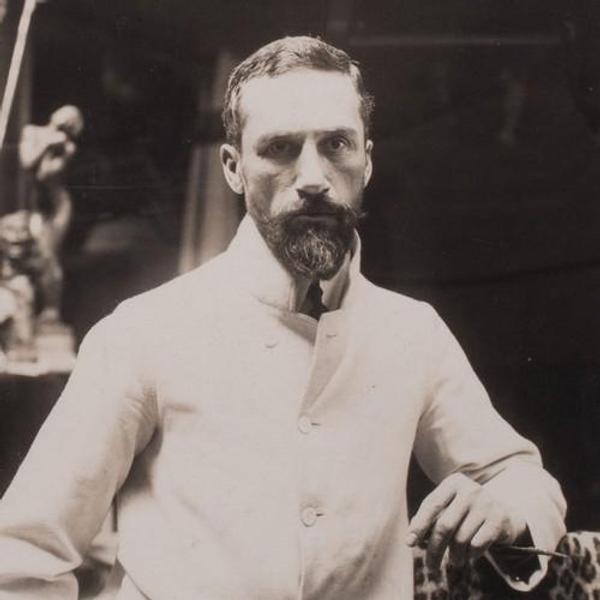
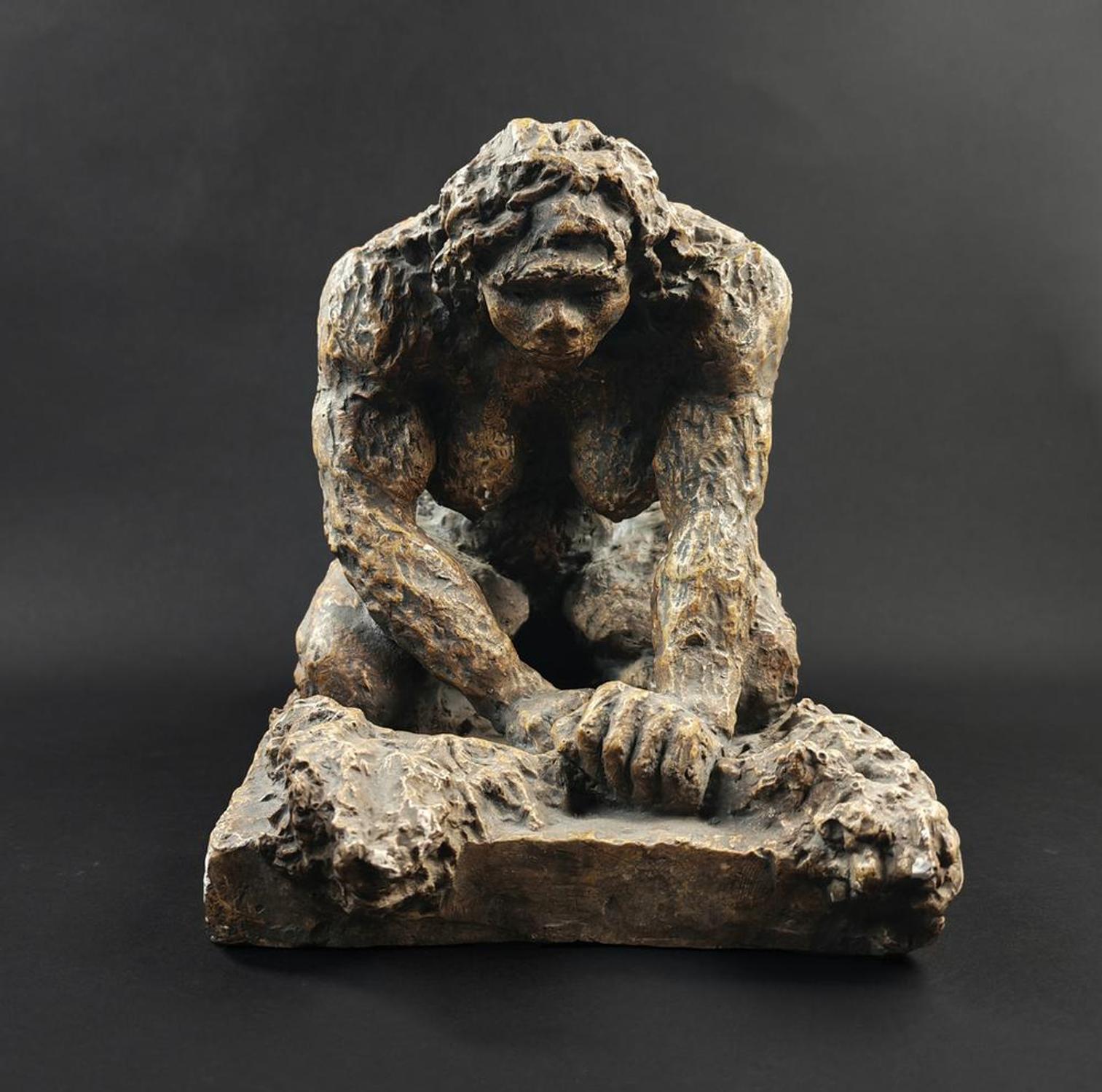
Femme préhistorique Yvonne Parvillée et Maurice Faure, circa 1925 - coll. muséum, Yvonne-Parvillee-MHNT.MISC.2025.0.14
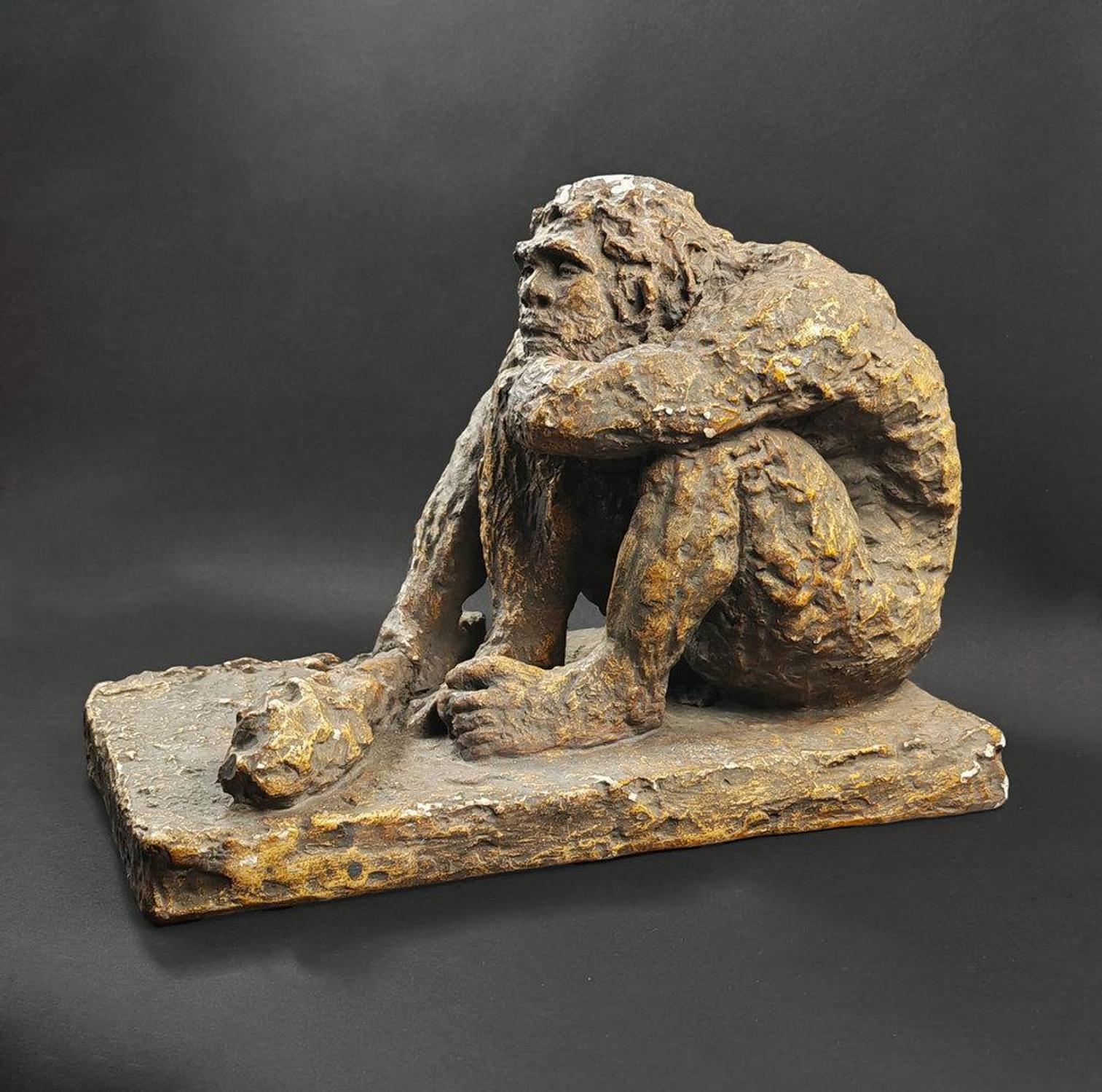
Homme préhistorique Yvonne Parvillée et Maurice Faure, circa 1925 - coll. muséum, Yvonne-Parvillee-MHNT.MISC.2025.0.15
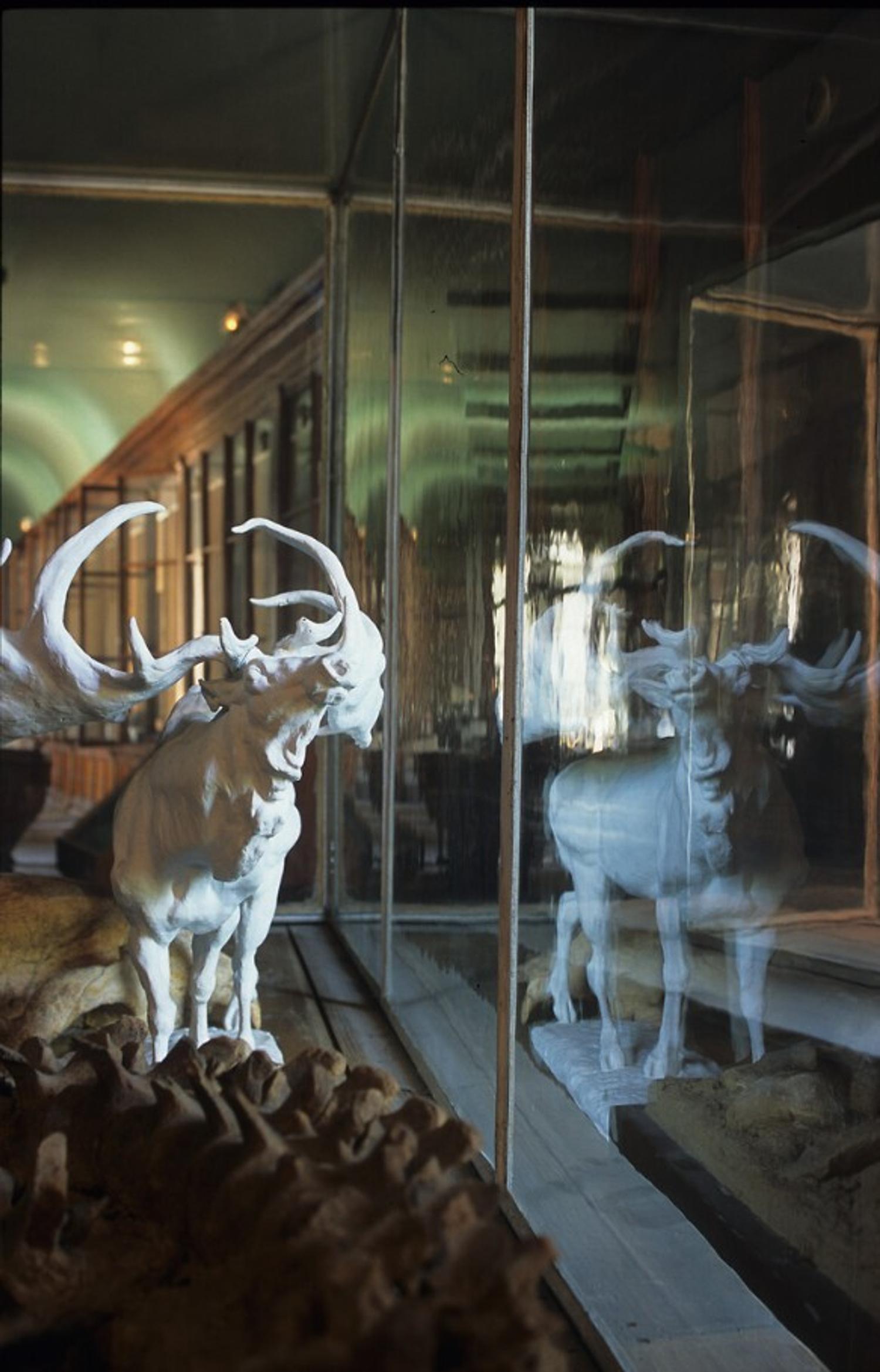
Cerf mégacéros de M. Alers, déménagement des collections, photo. : Pierre Dalous
MAPS
Other examples of artistic techniques used for scientific purposes include relief maps modelled and sculpted by cartographers such as the Pyrenean expert Toussaint Lézat, and those from the Lartet and Leymerie collections. In 1883, Bonhenry helped create the vast map by Charles Decomble, which is held by the Société de Géographie at the Hôtel d'Assézat.
The collection also includes three reconstructions of dolmens studied by Émile Carthailhac. He worked for many years to establish a geography gallery at the museum. Although his efforts were ultimately successful, this gallery was short-lived.
scientific equipment
Although they account for only a very small proportion of the collection in terms of volume, these old tools and decorative items—some of which are now considered obsolete—are by no means without value; as witnesses to the history of the institution and its practices, they form part of the collections.
This is the case with the hammer belonging to the preparator Victor Bonhenry, a vasculum (an iron box for collecting botanical specimens) recently added to the collection, and the pharmacy instruments of Jean Mesplé acquired when the institution was reorganised, and the printing plates for illustrations in the journal Matériaux pour l'histoire primitive et naturelle de l'homme edited by Cartailhac and Eugène Trutat.
Where an object, by its very nature, clearly does not fit into a practice or history that justifies its preservation in the museum, it may be transferred to another municipal facility and incorporated into an existing collection. This was the case, for example, with the sculptures that adorned the museum’s staircases and cloister prior to its renovation.
Viewed outside their original context of use or display, these artefacts—now museum pieces14—tell us as much about how scientific knowledge was approached and disseminated as they do about the working methods or social representations of local practitioners and theorists of that era.
Notes et références
- « Picot de Lapeyrouse d’après des documents conservés à la bibliothèque du Muséum national », Y. Laissus, Bulletin de la Société d’Histoire naturelle de Toulouse, 1972, T.108, Gallica, BNF
- « Les peintres toulousains et les Pyrénées à l’époque romantique », Marguerite Gaston, Annales du Midi, 1972, Persée
- Exposition des Produits des Beaux-Arts et de l'Industrie à Toulouse : Dans les bâtiments municipaux de la rue Neuve Saint-Aubin : Année 1858, Rosalis
- Le fonds Léon Soulié au musée Paul Dupuy
- Ses tableaux dans le catalogue du musée des Augustins.
- Recherches historiques, zoologiques, anatomiques et paléontologiques sur la girafe, (Camelopardalis giraffa, Gmelin), Nicolas Joly et Achille Lavocat, 1845, coll. muséum, cote 493.930 JOL, Rosalis
- Procès verbaux de la commission techniques - archives muséum, A 06 12 43
- On trouve des demandes de prêts et d’autorisations pour dessiner dans les galeries notamment dans les journaux du laboratoire du préparateur.
- La Dépêche du 26 avril 1878, - Gallica
- Mazzoli dans le catalogue du musée Paul Dupuy.
- Georges Henri Rivière bouleversa la muséographie avec le Musée nationale des arts et traditions populaires (1937-2005), les collections ethnographiques ne sont plus présentées aux publics de façon figées sur des mannequins. Voir le MNATP sur Bérose et « La muséographie et la scénographie d’expositions au musée national des Arts et Traditions populaires au travers des archives conservées aux Archives nationales », Pascal Riviale, 2025, exPosition.
- Le compte rendu de l’expédition, Voyage au Pôle sud et dans l’Océanie sur les corvettes « L’Astrolabe » et « la Zélée », est consultable à la bibliothèque du muséum (cotes C 2152 à 64) et dix volumes sont en ligne sur BHL.
- D'après les notices du muséum d''histoire naturelle de la Rochelle, une série lui a été envoyée en 1954, par le Muséum national. Le MNHN conserve également des bustes ainsi que le musée d'art et d'archéologie du Périgord (M.A.A.P.) qui conserve aussi des archives une collection Léon Pales. Le MQB-JC conserve des items et un fonds photographique ainsi que deux bustes du sculpteur Émile-André Leroy (le gouverneur de l'A.E.F. Raphaël Antonetti et un homme non nommé, possiblement Mokassa).
- « Les boîtes scolaires : outils de propagande coloniale », Emma Ben Aziza, 2024, , Gallica
- Christian Ruby aborde ce statut de l’objet au regard de son observateur et de son inscription dans une collection, particulière ou muséale, dans Vies d’objets, souvenirs de guerre, Nancy, pun-Éditions universitaires de Lorraine, 2015, Questions de communication, vol. 30, 2016, cairn.info. Il évoque également le (dé)cloisement des arts, sciences et techniques dans son article « Arts et Sciences / Sciences et Arts. Sur une médiagraphie en cours de réalisation », Le Philosophoire, vol. 35, 2011, cairn.info
Photo. d'en-tête : Exposition de géographie, Jacobins, Toulouse, par Eugène Trutat - MHNT.PHa.1824.A.50
Julia Vila, chargée de recherches documentaires et des collections de miscellanées, 2019, mise à jour 2025