Photography
The collections are organised chronologically: the first comprises the historical collection, containing over 23,000 glass plates and prints; the second comprises the modern collection, consisting mainly of commissions placed with the council’s photographers or private photographers (from the 1960s to the late 1990s); and the third, the contemporary collection, includes collaborations with photographic artists, photographs taken by the former photographer, the photo librarian and museum staff, volunteers, and commissioned works.
Le fonds ancien
A large proportion of these photographs were taken by Eugène Trutat (1840–1910), the first curator of the Toulouse Museum in 1865 and its director from 1890 to 1900. Trutat, a skilled technician, pioneer of photography and public speaker, also regularly collected or reproduced the photographs of his colleagues.
This collection also contains several photo albums by various authors, as well as a digital copy of a silent film by Joseph Mandement, shot at the museum in October 1918, featuring Louis Capitan, Philippe Lacomme, Émile Cartailhac and Henri Bégouën.
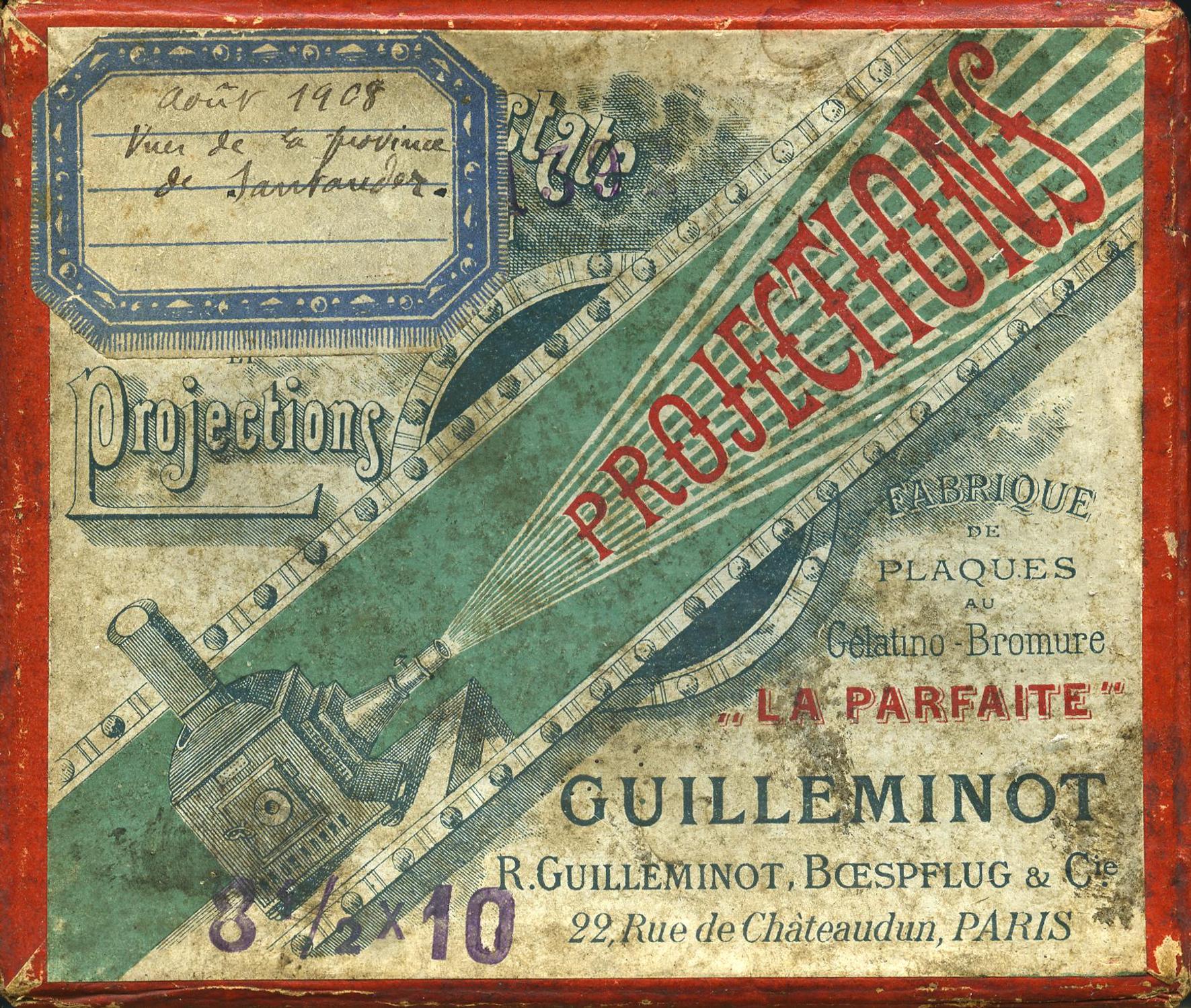
Boîte de plaques Guilleminot « La parfaite » avec la mention manuscrite : « Août 1908, vues de la province de Santander » – coll. muséum
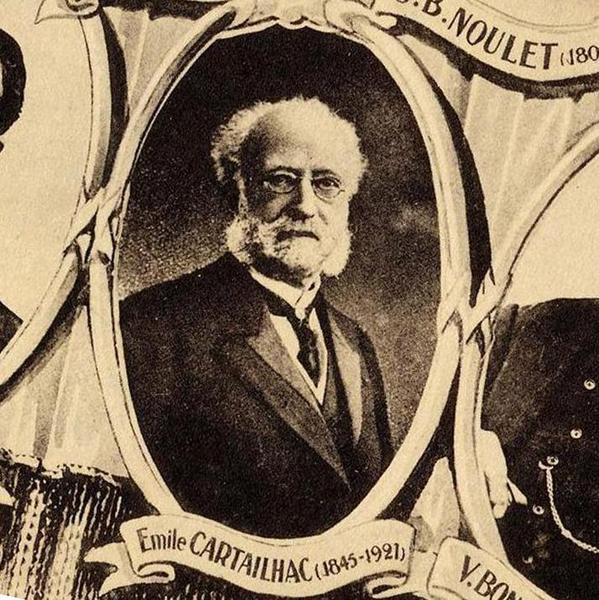
Among the identified photographers, this collection also includes photographs by Émile Cartaihac (Spain, Portugal), Gustave Julien and Aristide Maria (Madagascar), Philippe-Jacques Potteau (“types”), Augustin Pujol (commissioned work) and Louis Mengaud (Pyrenees, Spain), as well as an album by Adrien Vittu de Kerraoul (Oceania, French Guiana).
Very soon after it opened, the museum set up a photographic laboratory and photographs were taken in-house. These photographs or reproductions were intended, in particular, to illustrate the scientists’ public lectures. After Trutat’s departure, Cartailhac argued in favour of keeping the laboratory, stating that photography was “now a normal part of life in a major museum” (A 06 12 43, Séances de la Commission technique).
The subjects covered are extremely varied: anthropology, archaeology, architecture, mountaineering in the Pyrenees, scientific and military expeditions (Algeria, Asia, Spain, French Guiana, Madagascar, New Caledonia, etc.), Toulouse and its surroundings in the 19th and 20th centuries, as well as the scientific activities carried out at the museum. The technical processes used are just as varied as the themes: collodion or silver bromide gelatin negative plates, stereoscopic plates, projection plates, calotypes, cyanotypes, albumen paper, and flexible films.
This collection and the accompanying photographic material illustrate the wide range of photographic techniques used between 1860 and 1930.
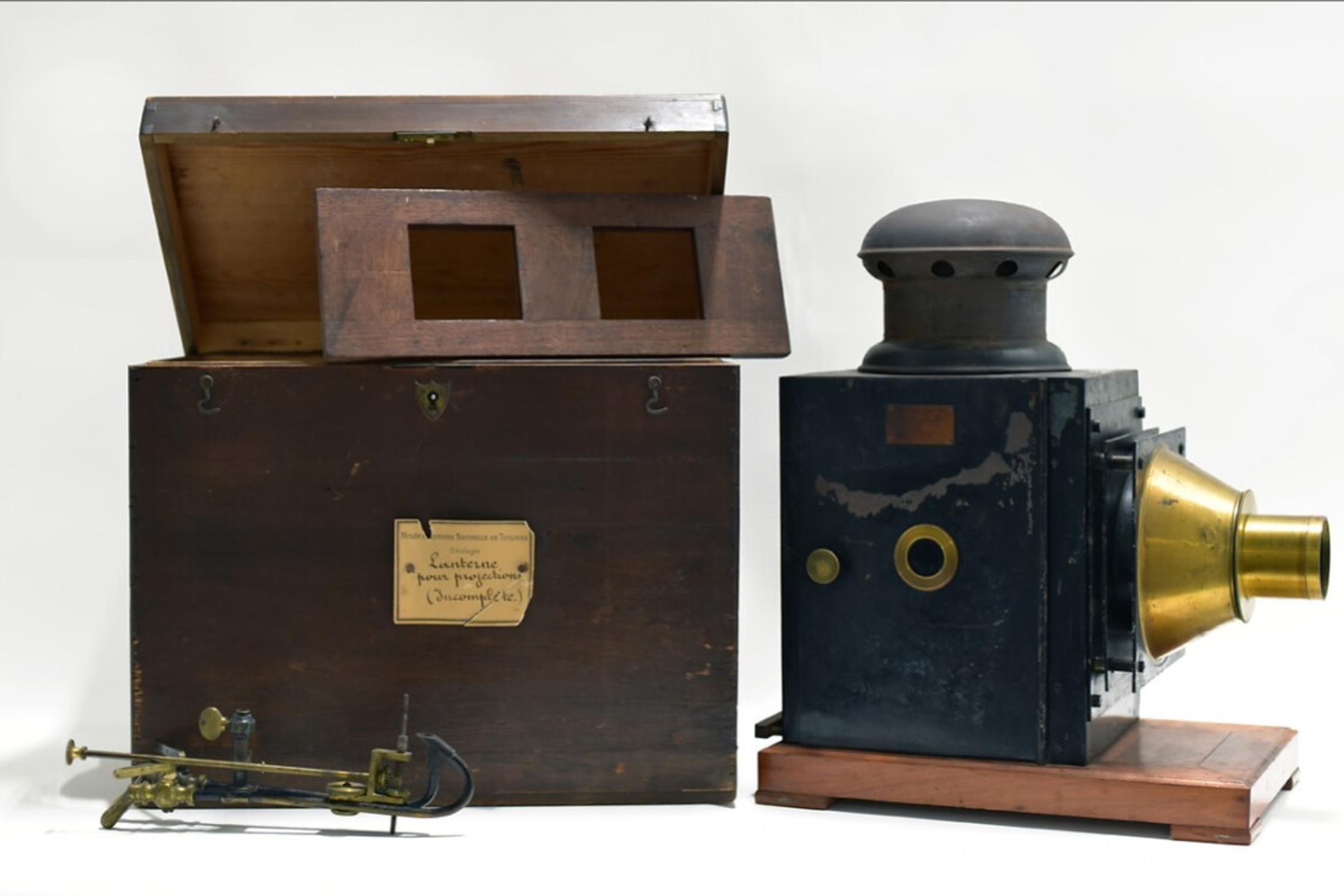
Projection lantern – museum collection, MHNT.PH.2015.0.1
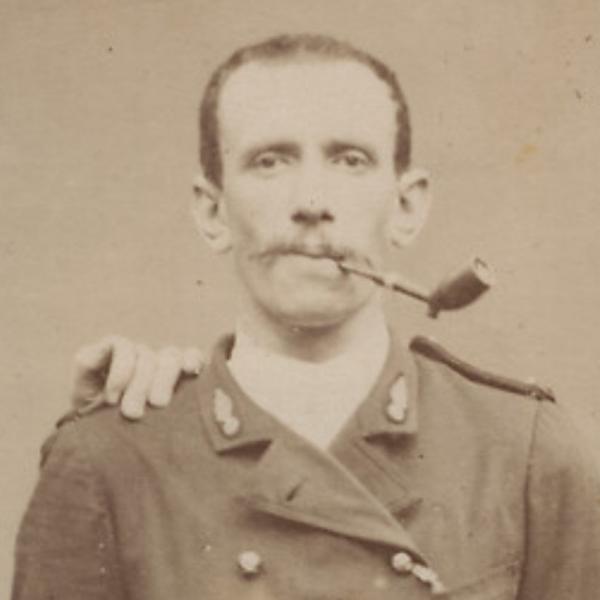
Adrien Vittu de Kerraoul
(1858-1935)
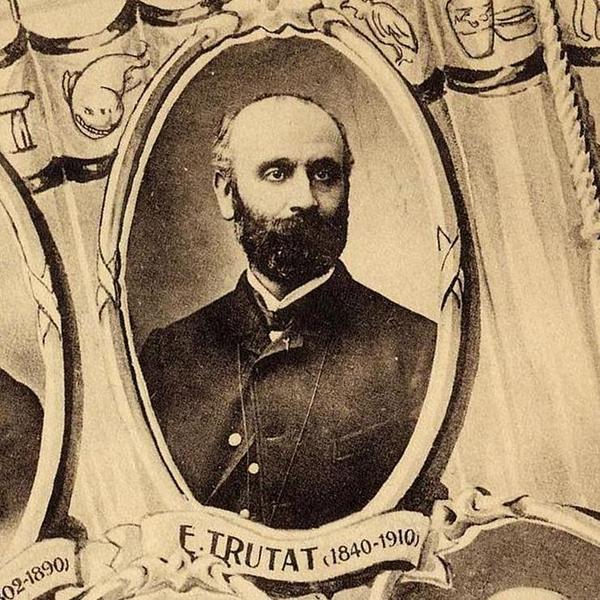
fonds Eugène Trutat (1840-1910)
The largest collection is that of Eugène Trutat (curator of the museum in 1865, then director in 1890), comprising nearly 14,000 items (including around thirty different formats of glass plates, prints and paper negatives), of which 1,010 were acquired by the museum on 23 November 1910 following his death (A 06 11 09).
Trutat was one of the pioneers of scientific photography and co-founded the Toulouse Photographic Society alongside Charles Fabre in 1875. He took numerous photographs at the Museum of Architecture and Collections, notably a small series from the collection of ancient Kanak cultural anthropology. He also documented several events linked to local scientific life, such as the 1884 Geography Exhibition or the inauguration of the faculty in May 1891 in the presence of Sadi Carnot. He also took many photographs of his travels and excursions in the Pyrenees, Spain, Italy, Algeria and, more broadly, throughout France.
Trutat was close to Félix Régnault and Maurice Gourdon, fellow photographers with whom he went on excursions and trips. For example, he attended the A.F.A.S. Congress in Algeria in 1881 with Régnault and Georges Ancely (a photographer whose collection is held at the Paul Dupuy Museum).
fonds Augustin Pujol
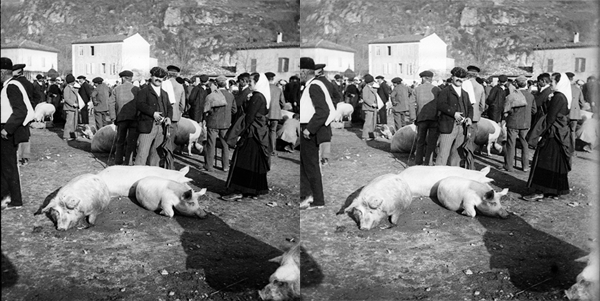
Animation d'une photographie stéréoscopique, "Foire aux cochons", de Trutat Foire aux cochons de Foix, mars 1903, photo. d’E. Trutat – coll. muséum, MHNT.PHa.45107.01.001
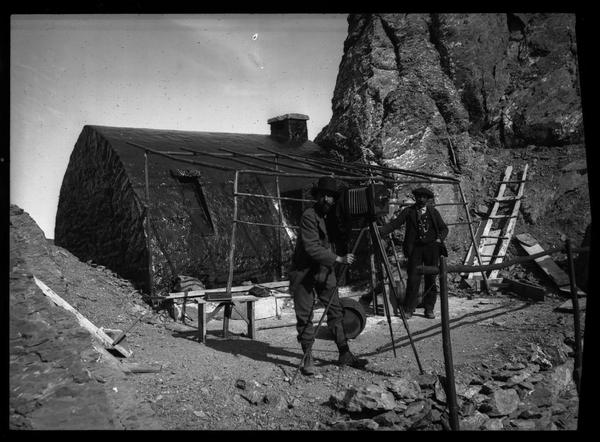
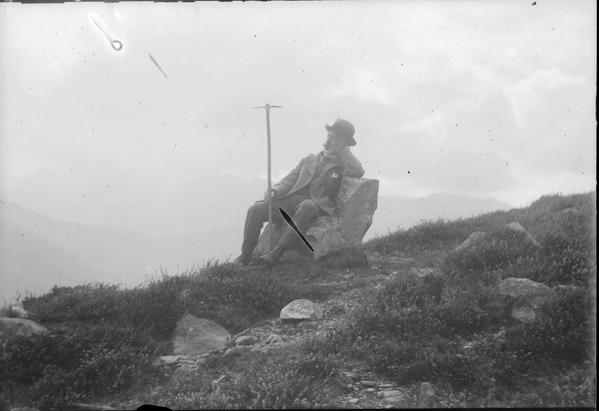
Around two hundred photographs are attributed to him, mainly in 13 x 18 cm and 9 x 12 cm formats, including those taken for the book Ville de Toulouse: Natural History Museum published by the museum in 1923 and held in the library (call number A 139, available on Rosalis).
Augustin Pujol was a professional photographer who worked, amongst other things, for the musée d'histoire naturelle de Toulouse. He had two studios, one in Paris and the other in Toulouse at 23 Allée Saint-Michel, now Allée Jules Guesde. He carried out commissions for the museum between 1910 and 1940. He photographed the galleries, the collections, the main stages of the creation of the bison and the Tuc d’Audoubert diorama, and the taxidermy specimens, including the elephant Punch and the restoration of the giraffe by Philippe Lacomme.
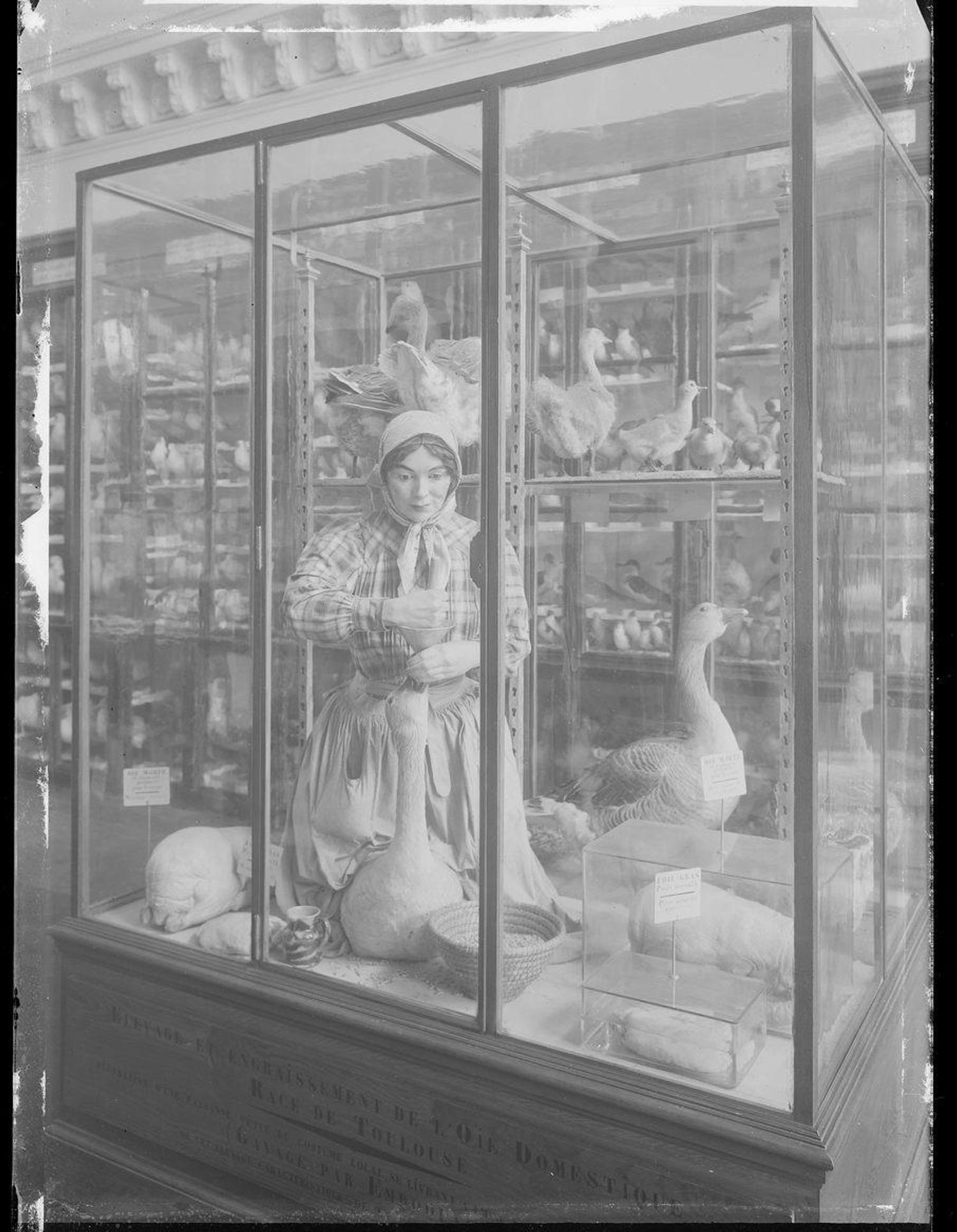
Gaveuse d'oie par Philippe Lacomme, A. Pujol - coll. muséum, MHNT.PHa.138.B05.10
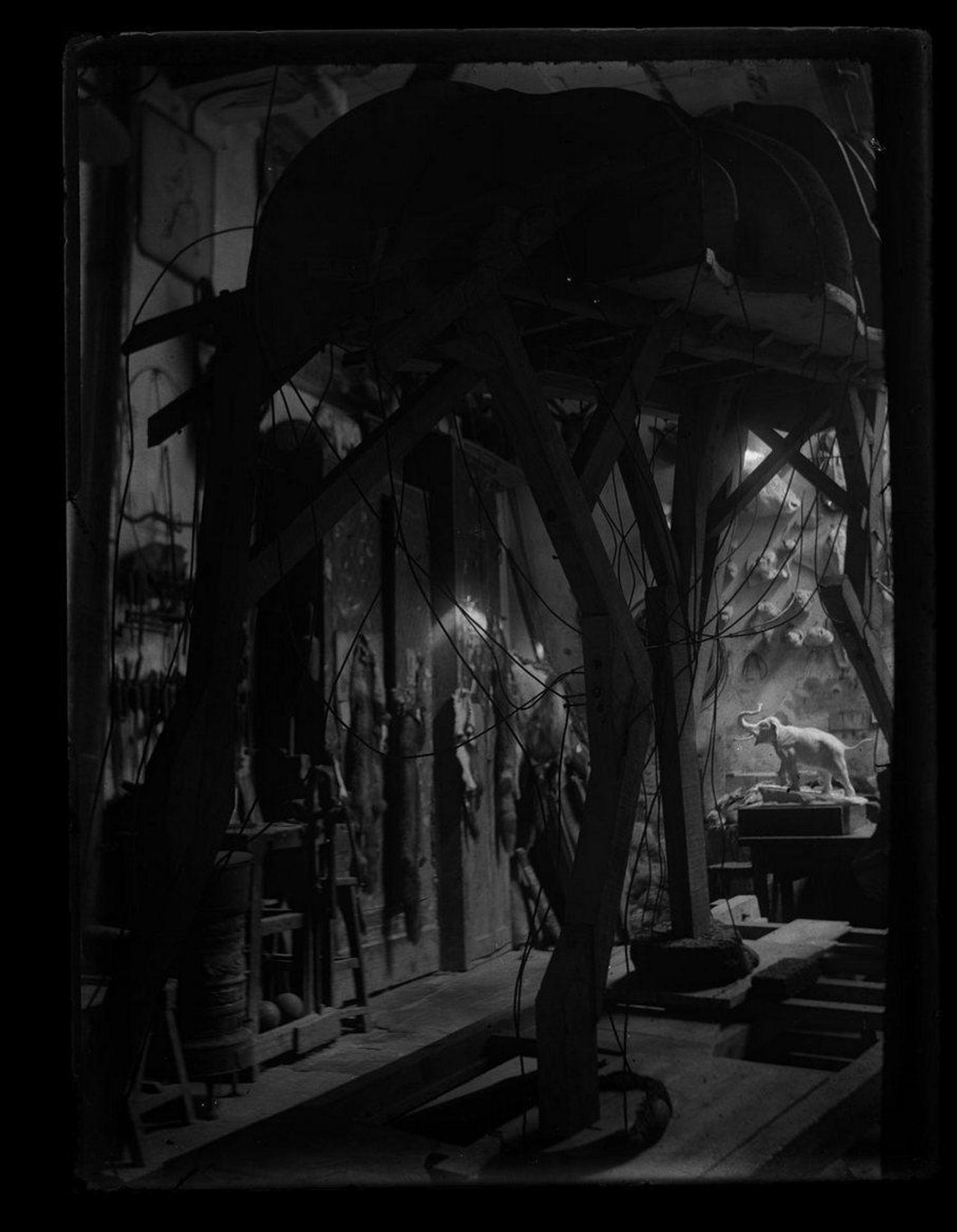
Montage de l'éléphant Punch par Philippe Lacomme, A. Pujol - coll. muséum, MHNT.PHa.912.M2.02
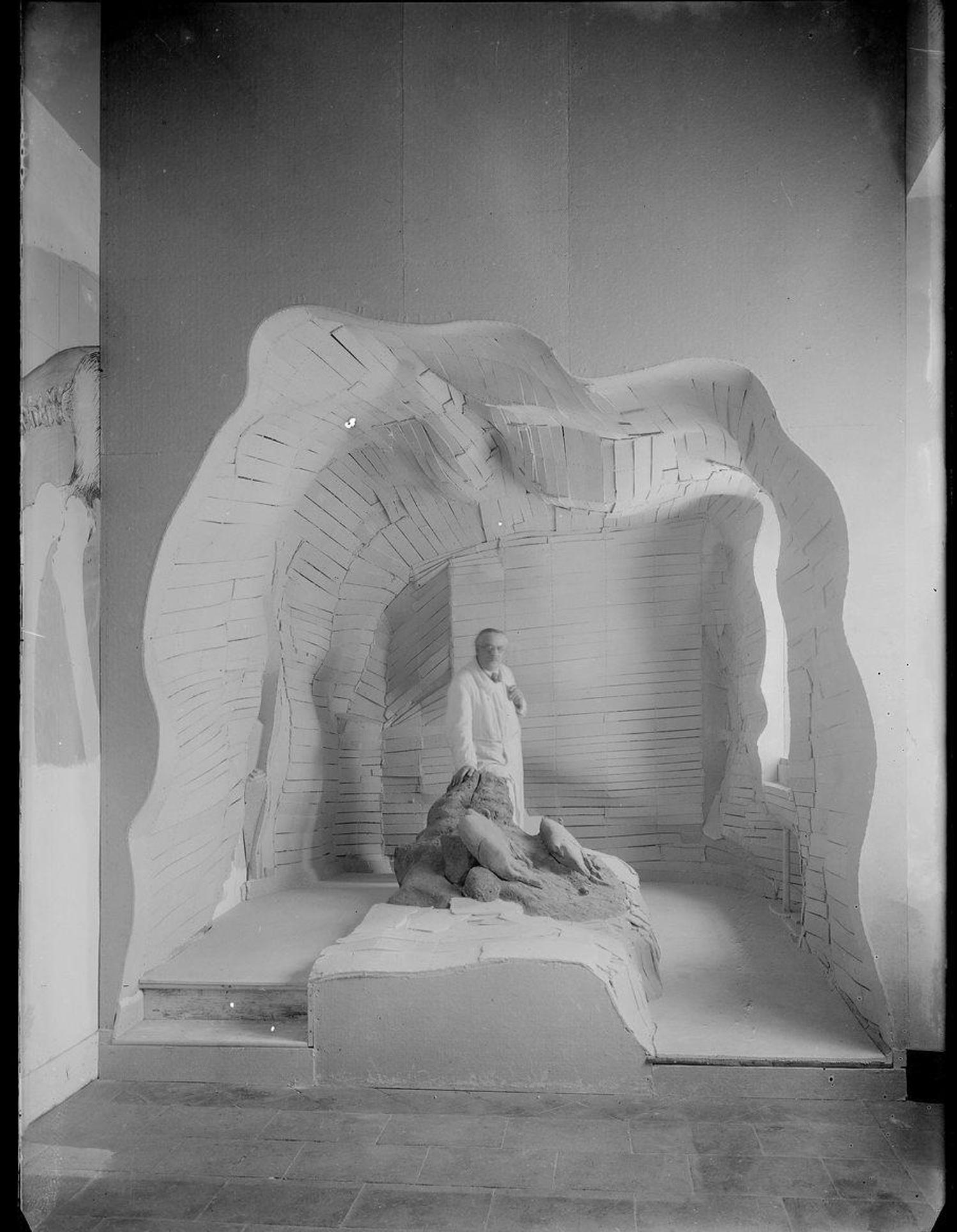
Reconstitution de la caverne du Tuc d'Audoubert par Lacomme, A. Pujol - coll. muséum, MHNT.PHa.138.B06.10
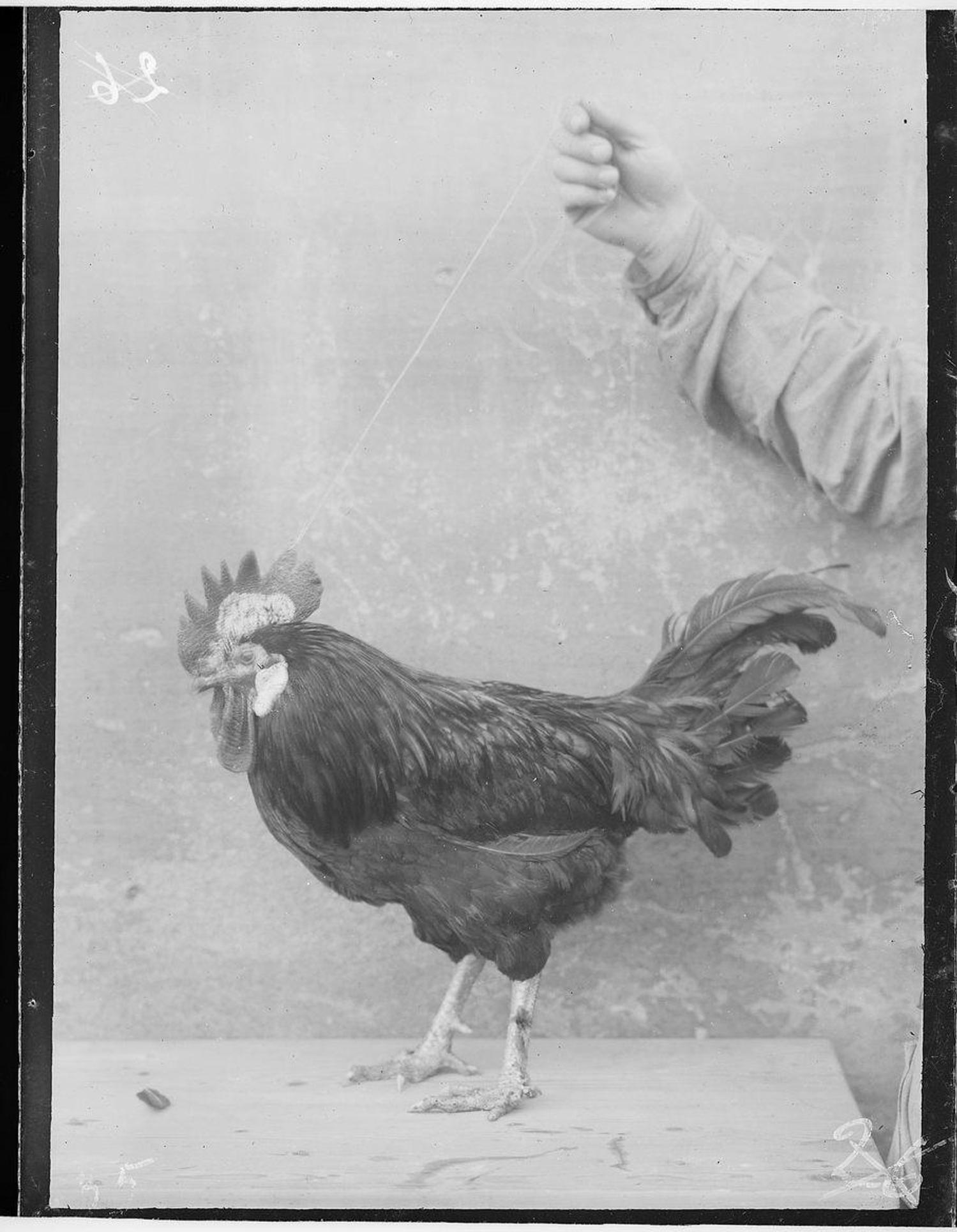
Coq, attribuée à A. Pujol - coll. muséum, MHNT.PHa.138.B22.025
Augustin Pujol
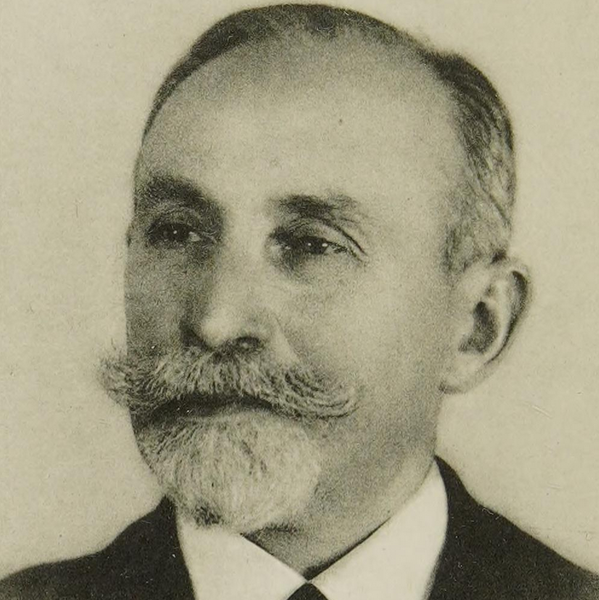
Louis Mengaud
(1876-1957)
fonds LOUIS MENGAUD (1876-1957)
Professor Louis Mengaud was curator of the geology and mineralogy collections at the musée d'histoire naturelle de Toulouse from 1912 to 1925 and a member of the museum’s supervisory board until 1943. Some of his photographs were taken to illustrate his university lectures on geology at the Faculty of Toulouse and cover geology, mineralogy, palaeontology and seismology, whilst others focus on Spain and the Pyrenees. His palaeontological collection is held by the University of Toulouse.
fonds Roland Bonaparte (1858-1924)
Roland Napoléon Bonaparte, known as ‘Prince Bonaparte’ and a descendant of Lucien Bonaparte, was a geographer and botanist. The museum holds “anthropological” photographs acquired in the 19th century, as well as ethnographic items forming part of a collection exchanged for Pyrenean costumes with the Musée du Trocadéro in 1891. The museum’s photographs (photomechanical prints and albumen prints) depict the group of Omaha Native Americans exhibited at the Jardin d’Acclimatation in 1883 and Sami photographed during Bonaparte’s expedition to Sápmi1 (a self-designation used for ‘Lapland’, a term considered pejorative and colonial).
The museum holds other acquisitions of this type of photograph, known as ‘anthropological photographs’ or ‘types’ (the Potteau collection), and Trutat also produced some, notably on the subject of the ‘déformation toulousaine’ (an old practice involving the binding of infants’ skulls with a headband).
The Bonaparte collection can also be viewed on the photographic collection platform.
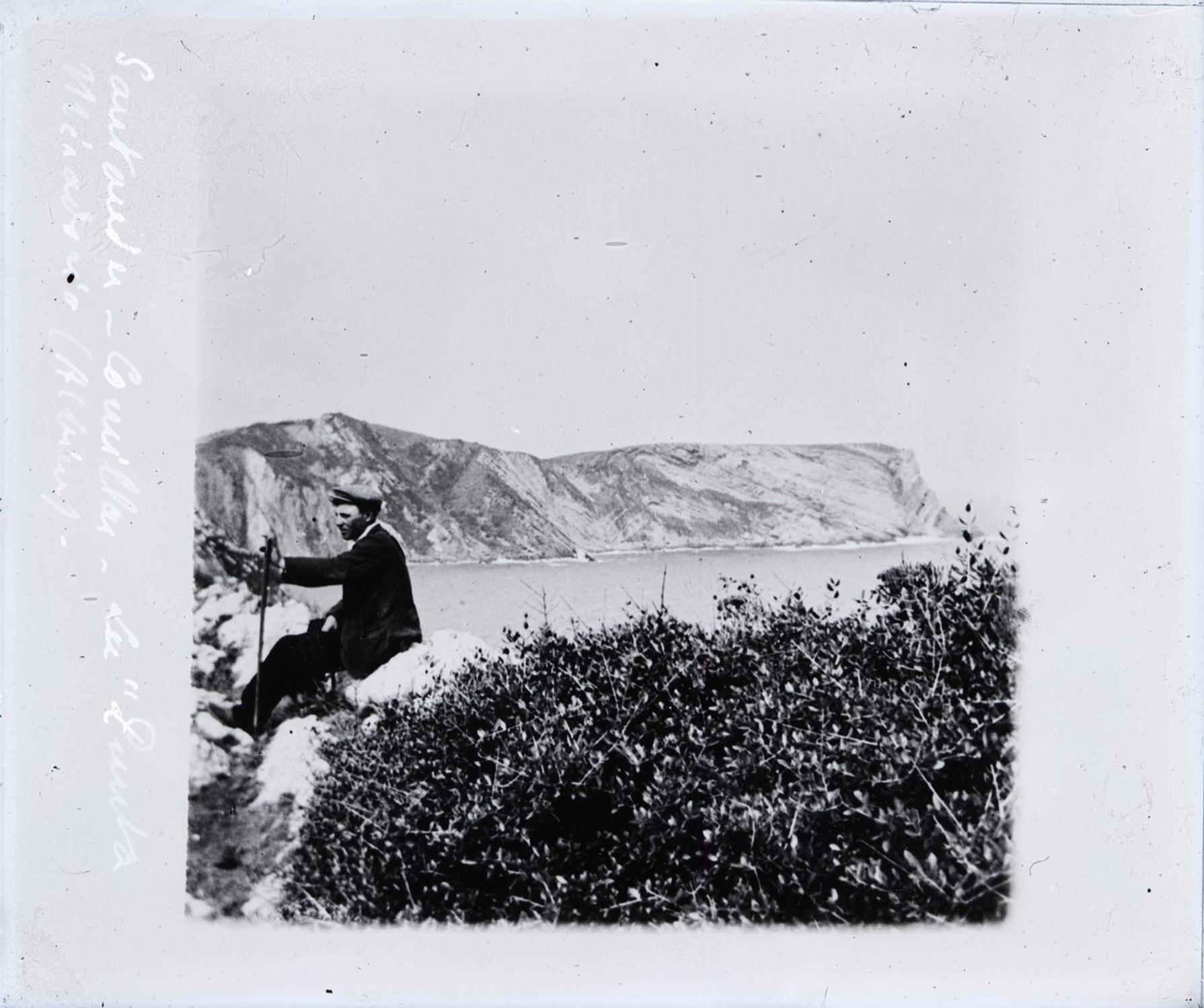
Santander, Comillas, La Punta Miradoria (Albien), L. Mengaud – coll. muséum MHNT.PHb.8510.08.0046
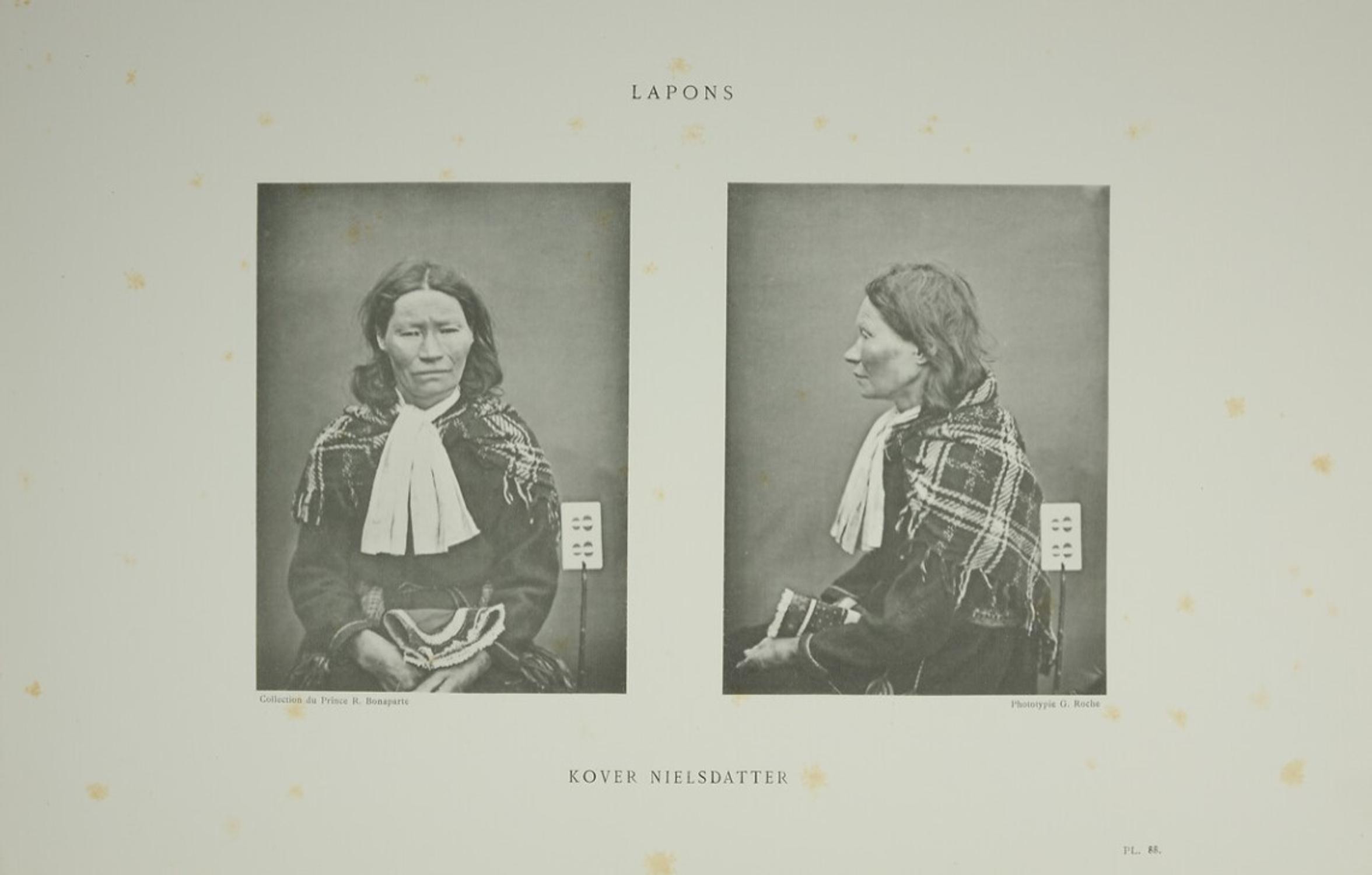
Kover Nielsdatter, n°88, R. Bonaparte – coll. muséum MHNT.PH.2014.0.3.71
fonds Jules Claine (1856-1959)
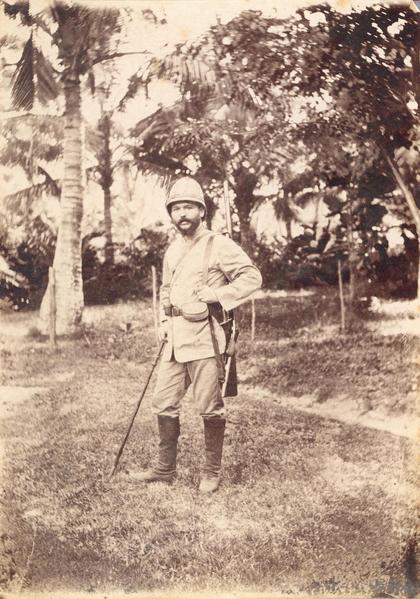
In October 1891, Claine wrote to Cartailhac (92Z-172/1) following their meeting at the Congress of Orientalists in London, where Claine had given a lecture. He sent him around forty photographs based on a list drawn up by Cartailhac, as well as a portrait of himself ‘as a memento of [their] meeting in London’. The series sent relates to his journey to Sumatra (June 1890 – June 1891) and covers Indonesia, Thailand and Malaysia. Originally intended for the Saint-Raymond Museum, which was about to open, it remains unclear whether it will be displayed at the ‘Museum of Ancient and Exotic Decorative Art’. These prints are held at the museum, which also houses birds from the Claine collection sent by the Muséum national.
!["27 Bonzerie à Singora [Songkhla] Golfe de Siam", photo. : Claine - coll. muséum MHNT.PHa.TIR.07.25](/files/claine-songkhla_db527d7f813cabaeefee2c7ba32aaf00.jpeg)
"27 Bonzerie à Singora [Songkhla] Golfe de Siam", J. Claine - coll. muséum MHNT.PHa.TIR.07.25
fonds Jean Mesplé (1916-2002)
Jean Mesplé followed his father, a postal worker, who was transferred to Kanaky-New Caledonia in 1929, where he remained until 1937, documenting his stay in great detail (Scout trips, a pharmacy placement, daily life). This collection, donated to the museum by his daughter Geneviève Mesplé (flexible negatives and glass plates), is the subject of a research project (ANR MIL-PAT 2025-2027) carried out in close collaboration with her (interviews, archives and family photo albums).
fonds Gustave Julien (1870-1936) et Aristide Maria (1870-1947 )
The collections of the colonial administrators Gustave Julien and Aristide Maria (portraits and views of Madagascar from the period of the French conquest) are linked to the cultural anthropology collections they donated to the museum and to those of General Gallieni, under whose command they served. Some of Maria’s photographs appear in the booklet for the 1900 World’s Fair on Madagascar, and a few are reproductions of works by other photographers active in Madagascar at that time (Perrot, Herschell-Chauvin, D.M. Paris). Identifying the photographers is not always straightforward: at that time, copyright laws were likely not enforced systematically (the Berne Convention for the Protection of Literary and Artistic Works, drafted in 1886, was very recent) and the Topographical Bureau of the General Staff employed numerous photographers, some of whom remained anonymous2. This office was established by Gallieni to map the territory and conduct a census of the population according to their ‘races’ (defined by physical criteria), with the aim of dividing the island into administrative districts in line with his ‘race policy’, which served the purposes of conquest and colonial propaganda3.
The collection also includes two cardboard sheets titled ‘Indigenous People of Madagascar’, which indicate that Julien is the author of the views (paper prints) they contain. They were probably used as visual aids for a lecture, and Eugène Trutat sent prints to the Geographical Society ([9 photographs of Malagasy ethnic types by Trutat in 1896], SGE SG WE-310, Gallica).
Research is currently being carried out on these collections, particularly regarding the identity of the people depicted.
fonds Bruguière
It consists of sixty stereoscopic plates and a portable stereoscope. The subjects depicted are the Aven Armand, Morocco, Paris, Lourdes and Fontainebleau. To find out more about Éditions Bruguière and discover other subjects, visit the website Le stéréopole.
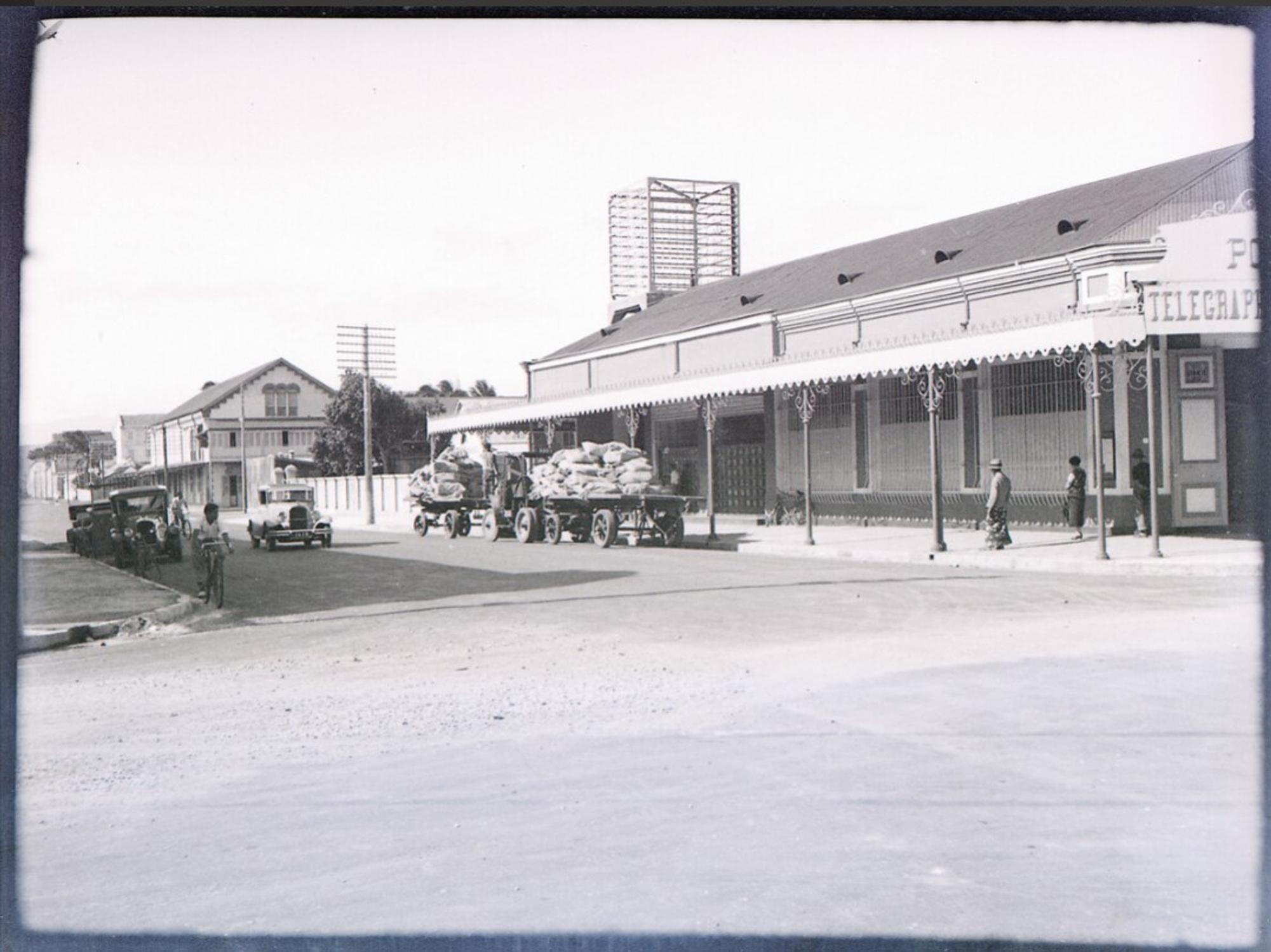
Poste de Nouméa, années 30, J. Mesplé - coll. muséum, MHNT.PH.2013.1.44.61
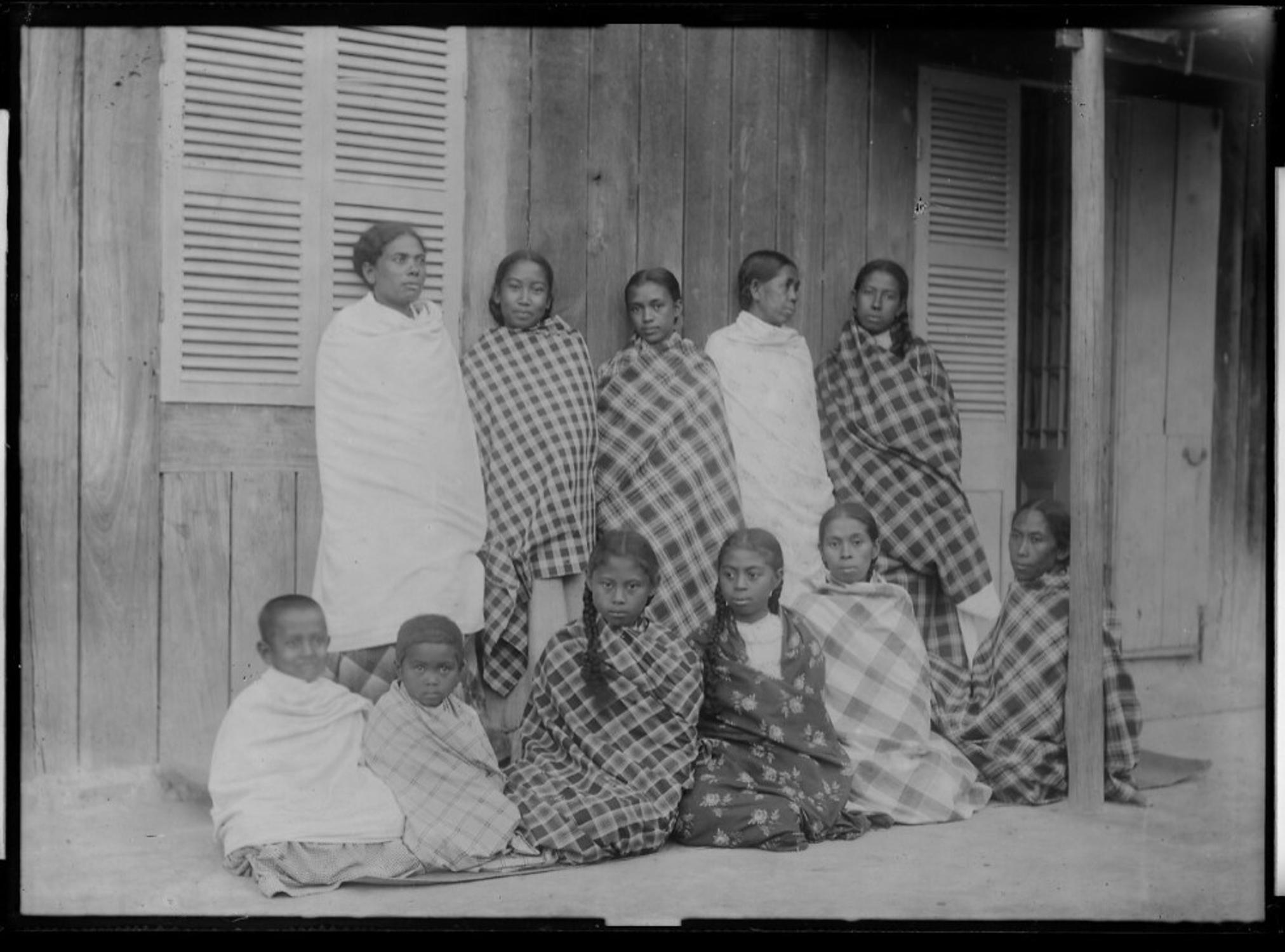
Femmes et enfants malgaches, G. Julien - coll. muséum, MHNT.PHa.138.B60.057
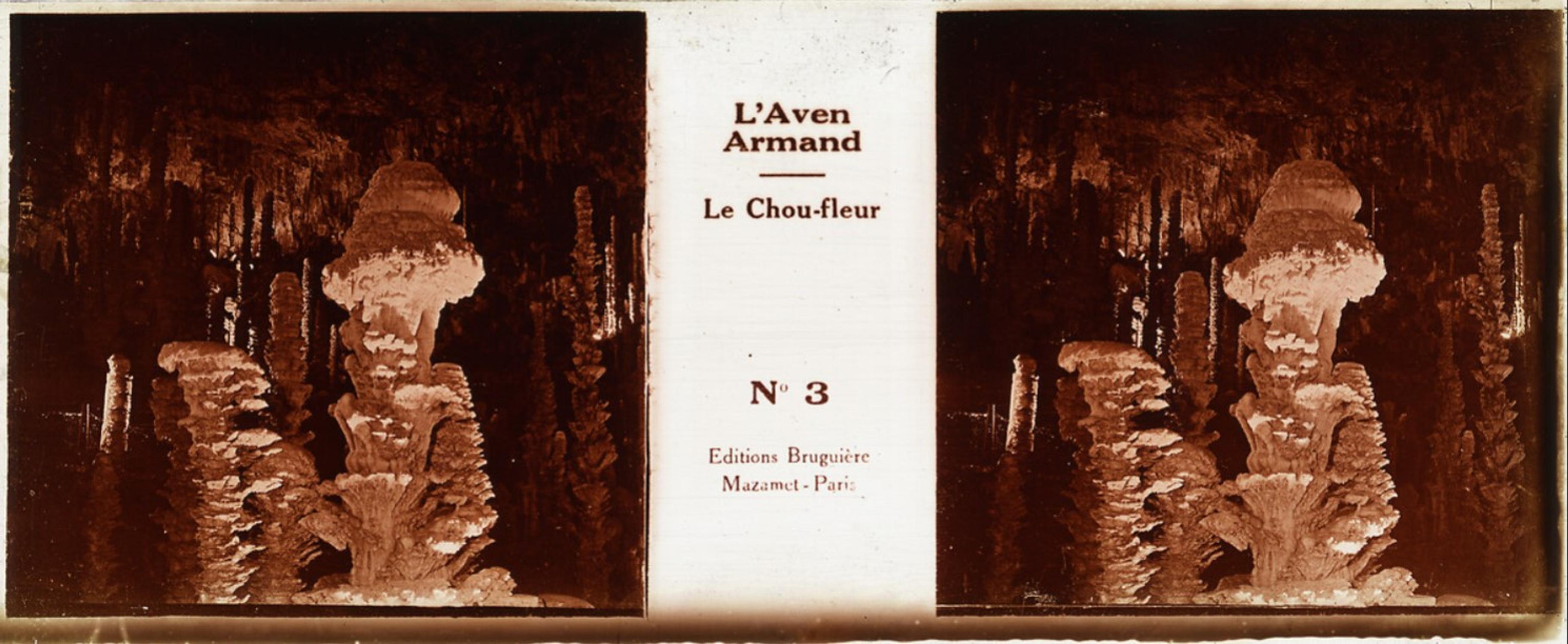
Le Chou-fleur - L'Aven Armand, Bruguière - coll. muséum, MHNT.PH.2016.1.3.2
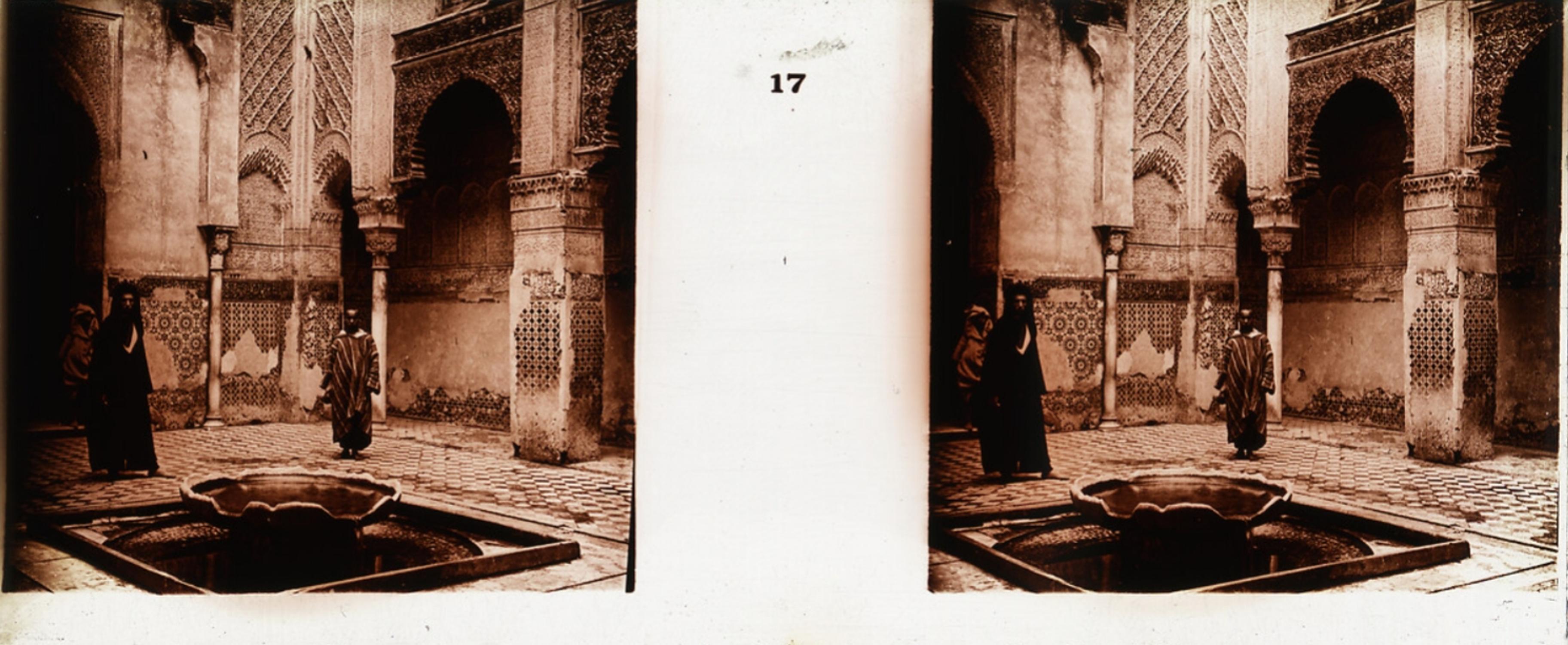
Médersa Al-Attarine - Maroc (Fès) - coll. muséum, MHNT.PH.2016.1.4.4
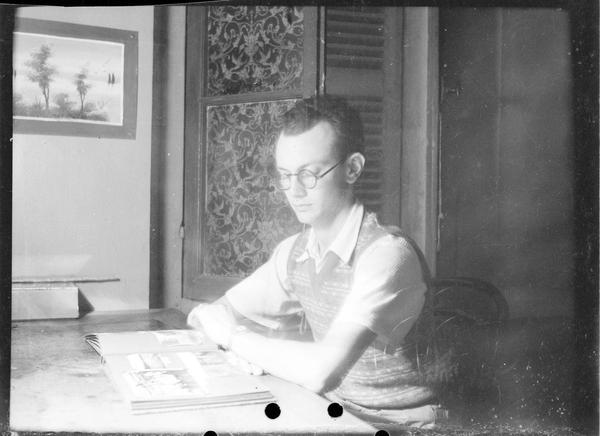
fonds Léon & LévY
The museum holds around fifty stereoscopic plates marked "Léon et Cie (succ. Ferrier et Soulier)"; these likely date from the period when the firm was run by Léon & Lévy (Moïse Léon and Isaac, known as Georges Lévy) or Lévy & Fils. Léon and Lévy worked as assistants to Ferrier and Soulier and bought out their business. They sold it to the printer Émile Crété in 1922, and the company became “Lévy et Neurdein réunis”. The plates hold by the museum are mainly colourised views of the Pyrenees, Biarritz or Lourdes.
fonds Jacques-Philippe Potteau (1807-1876)
The museum acquired a series of anthropological photographs (‘types’) from Jacques-Philippe Potteau, a photographer at the National Museum. Although undated, this acquisition is documented by a numbered list identifying the people depicted, which enabled their identification with the help of the records of the collection held at the Musée du Quai Branly. This collection consists mainly of reproductions of his own photographs as well as those by Louis d’Eichtal and Louis Rousseau. Some prints were reproduced in the museum’s laboratory, most likely for projection to illustrate lectures.
Le fonds moderne
The modern collection (1970–1990) consists of silver-based prints and slides produced by the former municipal photography studio in Toulouse. A few commissions were carried out by Jean Cousin and Jean Dieuzaide (Yan). These photographs mainly depict items from the museum’s collections, as well as exhibitions and events held at the museum.
Le fonds contemporain
La photothèque collabore avec des artistes photographes et plasticiens. Les créations qui en découlent constituent avec les nouvelles campagnes photographiques numériques, le fonds contemporain. Par exemple, en 2021, l’artiste Marie Frécon travaillait sur la question des espèces menacées et proposait une série de photographies axée sur les spécimens ornithologiques du muséum, qui fait l’objet d’expositions itinérantes.
Fonds MArie Frécon
This collection is the result of a collaboration between the photographer and visual artist Marie Frécon and the museum in 2021. Marie Frécon has been working with film for some twenty years and develops her own prints in the darkroom, specialising in toning, brush colouring and photograms.
This photographic series is based on work carried out using the museum’s ornithological collections and follows on from a previous series produced using the ornithological collections of the Gaillac Museum in 2016, entitled La mélancolie des Oiseaux.
It presents a display of regional birds focusing on endangered species, with the aim of raising awareness of biodiversity conservation issues.
She chose certain species included on the Red List compiled by the IUCN (International Union for Conservation of Nature), which assesses the level of threat to each species worldwide. In mainland France, for example, the bearded bustard is classified extinct the common crane as critically endangered and the bearded vulture endangered according to the IUCN Red List. This classification is, of course, subject to change depending on the conservation measures put in place. These photographs aim to restore these stuffed specimens to the world, giving them a new semblance of life.
This series gave rise, in particular, to the exhibition Le silence des oiseaux ?…, an exhibition organised by the photo library as part of Toulouse Métropole’s regional cultural initiatives; it pays tribute to the beauty, majesty and vulnerability of birds.
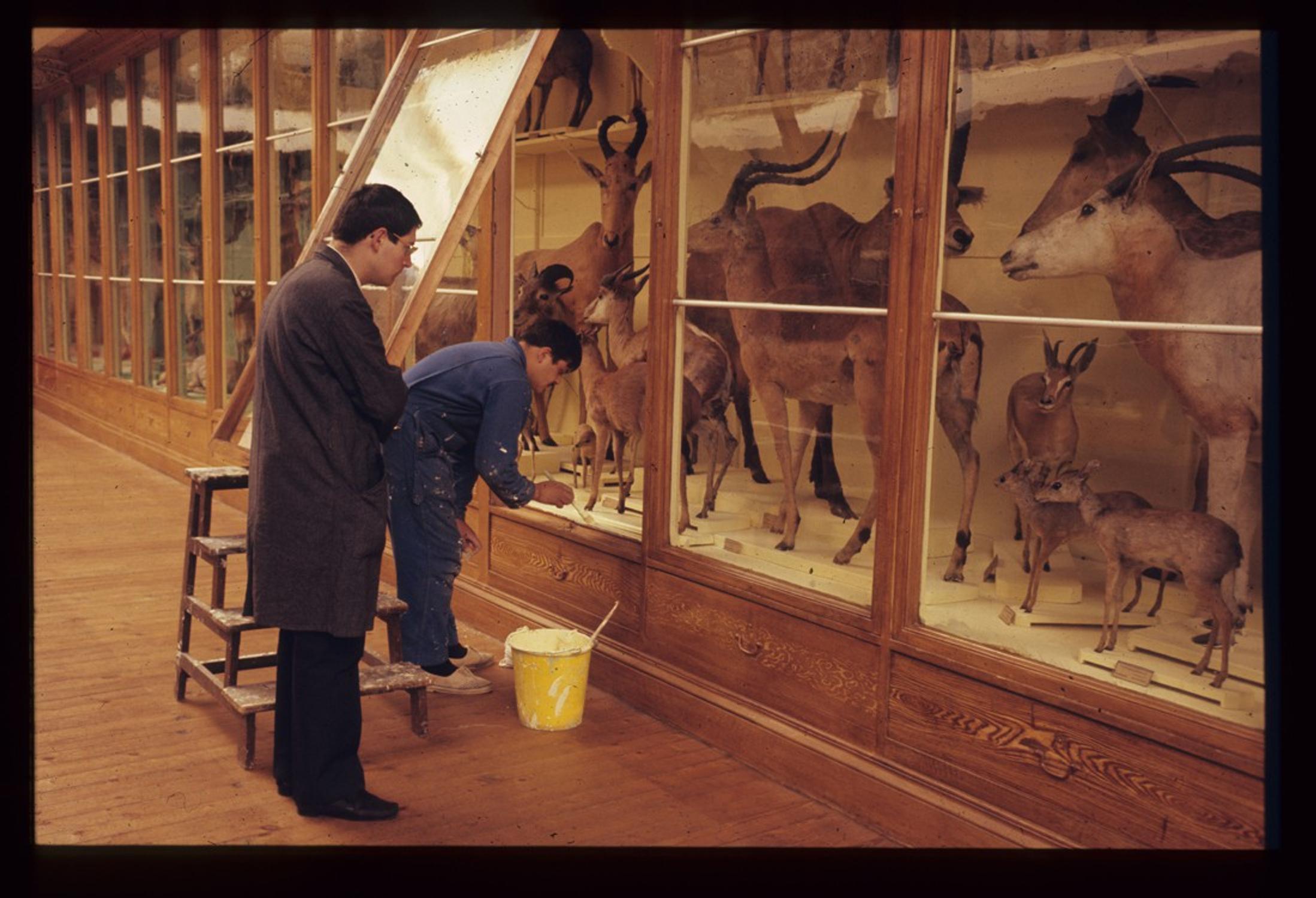
Travaux de peinture dans les galeries du muséum, photo. : Mairie de Toulouse, atelier photographique - coll. MHNT
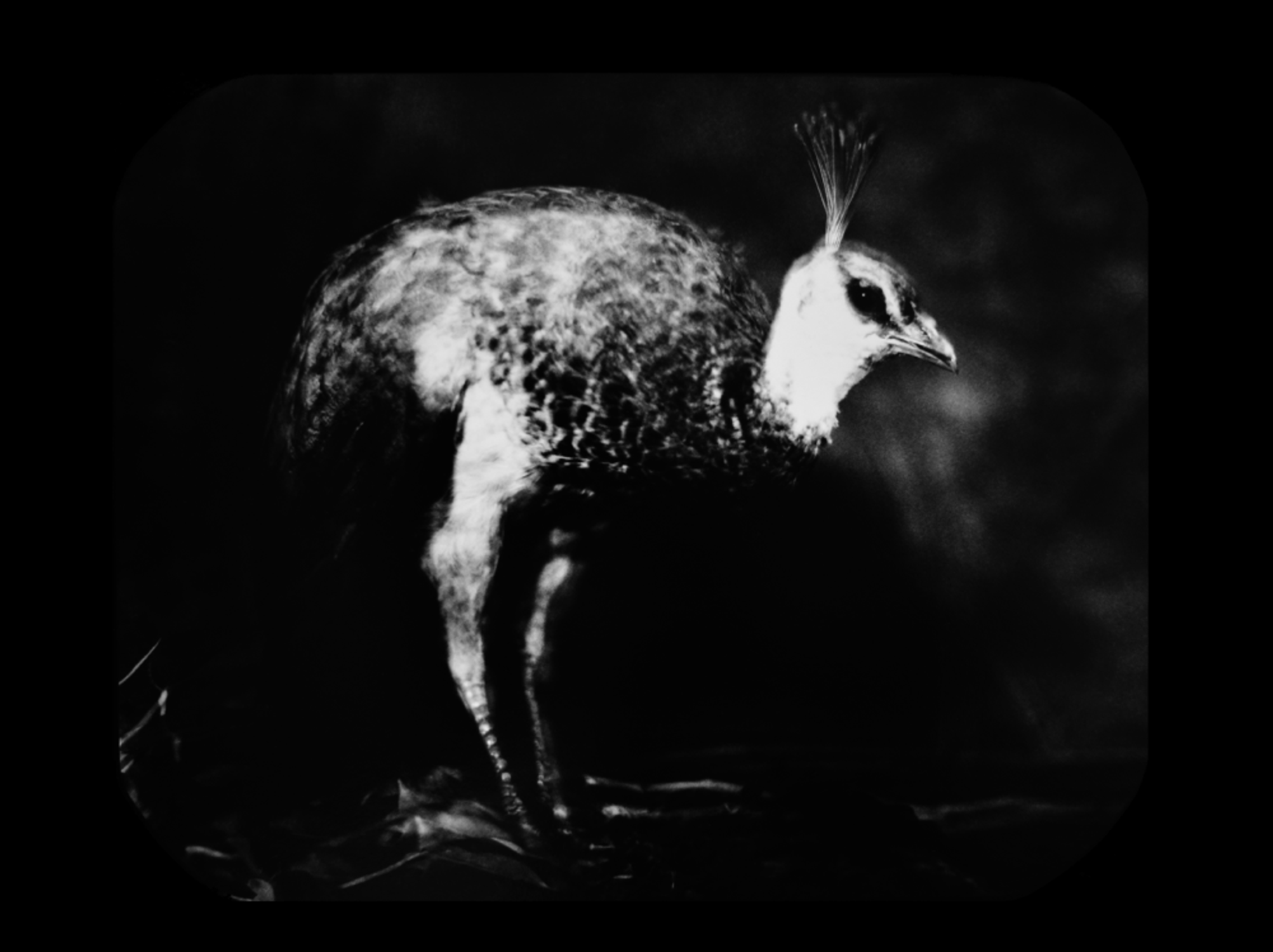
Paonne naturalisée conservée au muséum photographiée par Marie Frécon
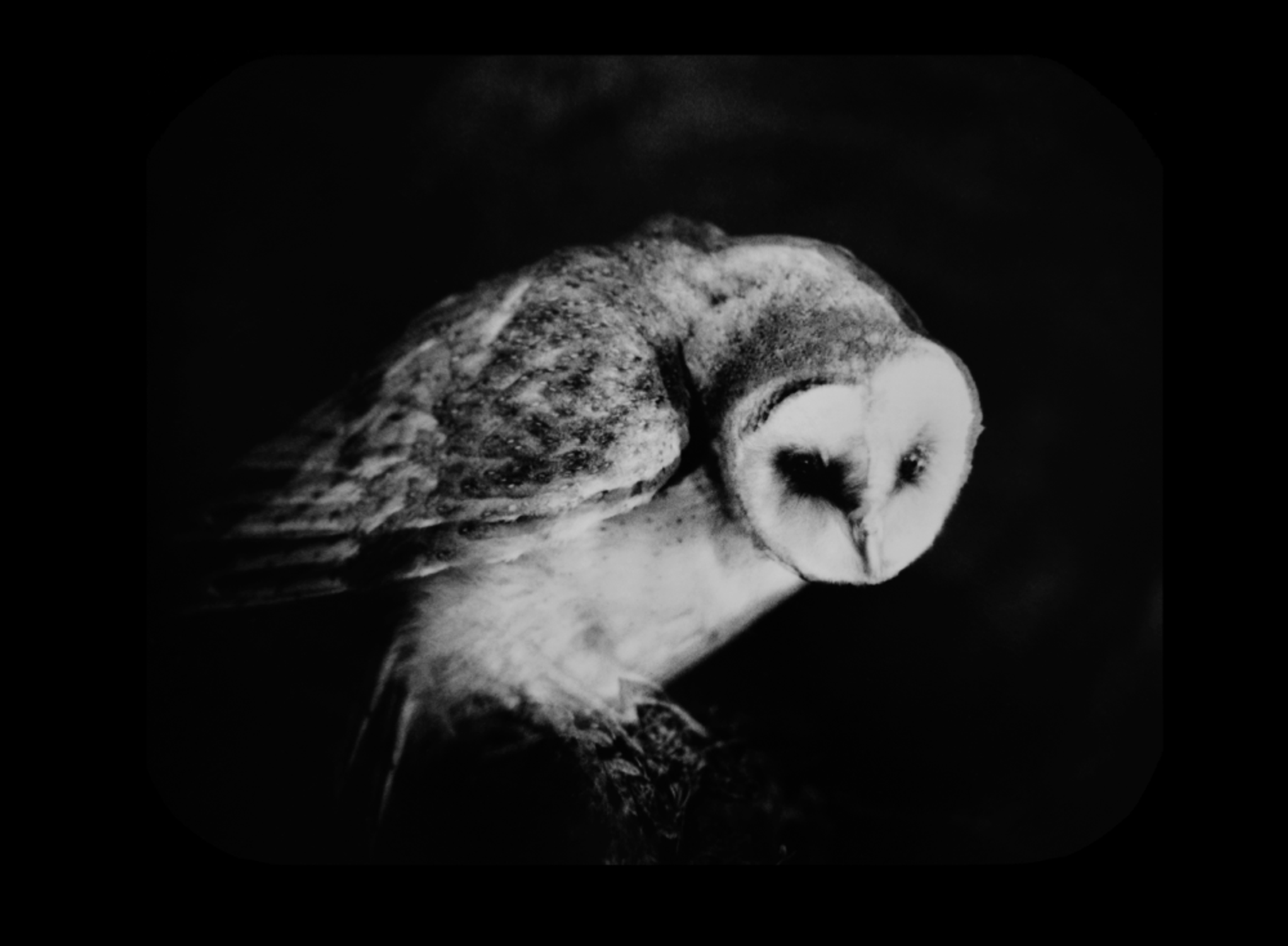
Chouette effraie naturalisée conservée au muséum, photo. : Marie Frécon
Notes
- Le prince Roland Bonaparte en Laponie : épisodes et tableaux. par F. Escard - Umeå universitetsbibliotek
- Le BTEM est créé en septembre 1896 par Joseph Gallieni à son arrivée à Madagascar. Les clichés réalisés servent autant à l'élaboration de relevés topographiques qu'à la propagande coloniale (« Les débuts de la photographie à Madagascar, solitaires et pluriels », Helihanta Rajaonarison, Mondes photographiques Histoires des débuts, 2023, Actes Sud-MQB-JC) ; voir le fonds Gallieni conservé aux ANOM
- « Photographies anthropologiques et politique des races », Journal des anthropologues, 2000, Gilles Boetsch, Eric Savarese (Openedition) : « Si ce dernier occupe, dans l’histoire de la colonisation, une place singulière, c’est en raison de l’élaboration d’une praxis coloniale fondée sur la recherche d’une adéquation entre la connaissance scientifique des indigènes et la mise en œuvre de sa politique coloniale, dont il rendra compte auprès de son ministère de tutelle : « au moment de rentrer en congés en France après avoir exercé pendant trente-deux mois le gouvernement général de Madagascar, j’ai tenu à résumer dans un mémoire succinct les travaux entrepris et les résultats obtenus (bureau géographique et section géodésique de l’état-major du corps d’occupation), tant au point de vue de l’établissement de la carte définitive de la grande île, qu’à celui des productions photographiques et d’illustrations, travaux effectués dans le but de faire connaître notre nouvelle possession africaine, et surtout d’en favoriser la colonisation et le développement ». On le voit : la photographie anthropologique est l’un des moyens de collecte des données ethnographiques qui furent abondamment utilisés à des fins explicites de bonne administration coloniale. » ; Gallieni et la "Politique des races" à Madagascar - Défrichage d'Histoire Coloniale, Histoires crépues, YouTube.
références
- Le Tarn : Regard photographique d’Eugène Trutat (1840-1910), Bertrand de Vivies, Luce Lebart, Frédérique Gaillard, Donatien Rousseau, Éditions Grand Sud, Albi, 2013
- Biarritz par Georges Ancely et Eugène Trutat, Bruno Fay, Marc Ancely, Frédérique Gaillard, Luce Lebart, Patrice Guérin, Aquarium de Biarritz, Biarritz, 2016
- « Sciences, enseignement et photographie : les indissociables activités d’Eugène Trutat (1840 – 1910) », Frédérique Gaillard, In Plaques photographiques, fabrication et diffusion du Savoir, Colloque international organisé par Denise Borlée et Hervé Doucet, Institut d’Histoire de l’art (EA 3400), Université de Strasbourg, mars 2016 (Presses Universitaires de Strasbourg, 2019)
- Présentation de l’exposition Eugène Trutat du Muséum de Toulouse, Christophe Giffard
- Instants saisis, Emma Fariñas, Mira productions, 2015
- « Organisation d’une photothèque polymorphe dans un muséum en perpétuel mouvement : le muséum d’Histoire naturelle de Toulouse et ses 150 ans de photographies », Frédérique Gaillard, Les dossiers de l’OCIM Musées, Centres de sciences et réseaux documentaires : s’organiser et produire, OCIM, 10 octobre 2016, p. 127 (ISBN 978-2-11-139616-6)
- Séances de la Commission technique, A 06 12 43
- Registre d'inventaire A 06 11 09 (n°3492, achat de 1010 clichés par le muséum)
À retrouver dans ces thématiques
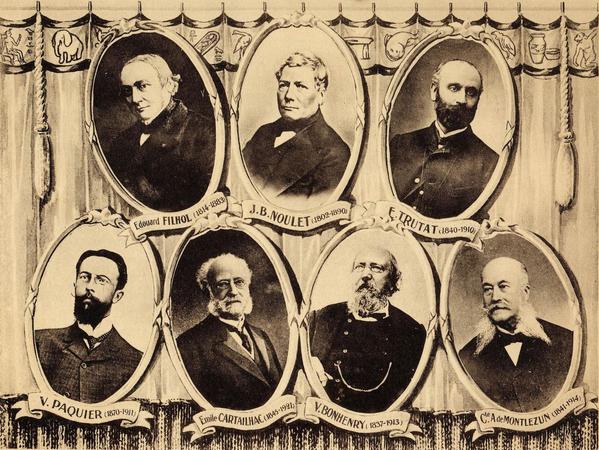
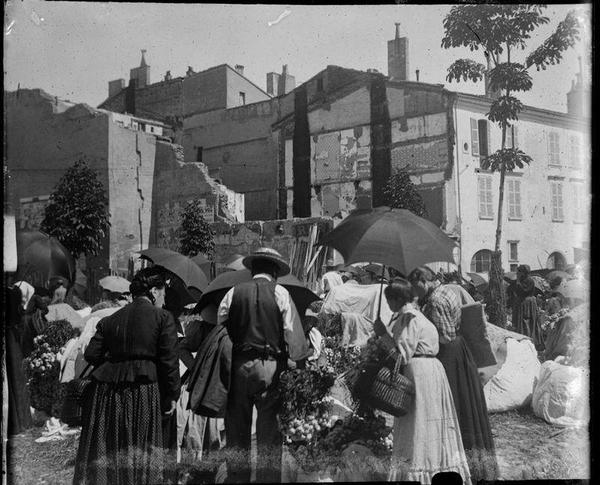
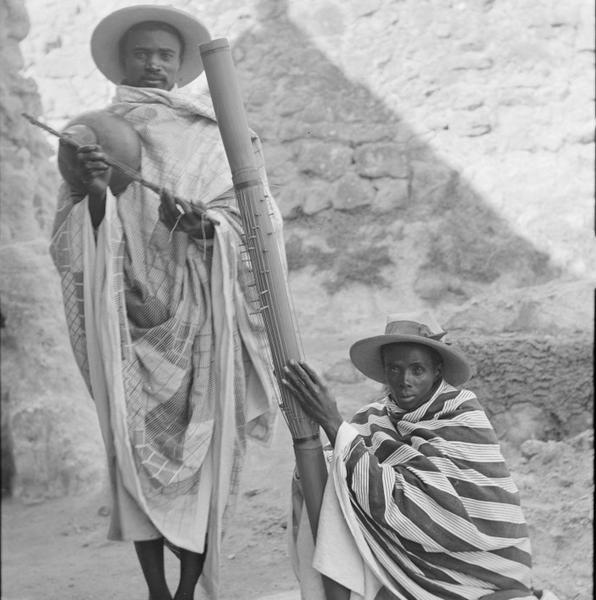
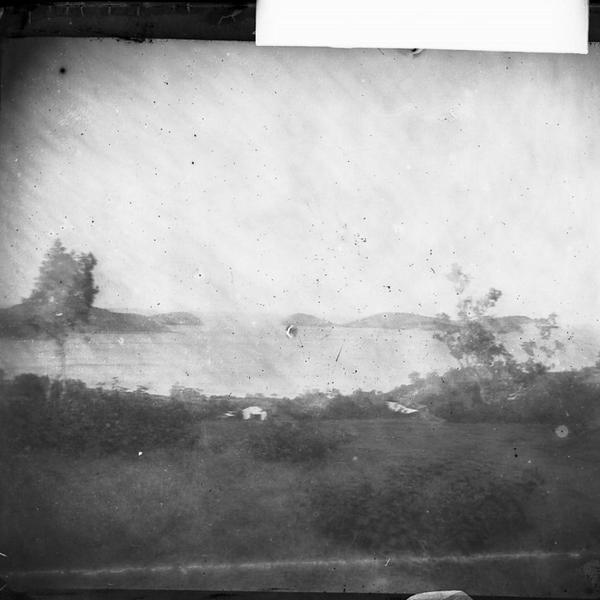
Photo. d'en-tête : Victor Bonhenry, atelier de taxidermie, photo. Trutat - coll. muséum, MHNT.PHa.1824.06.001a
Lisa Cocrelle, responsable de la photothèque et Julia Vila, chargée de recherches documentaires, dernière mise à jour : 2026